

Quick Summary :
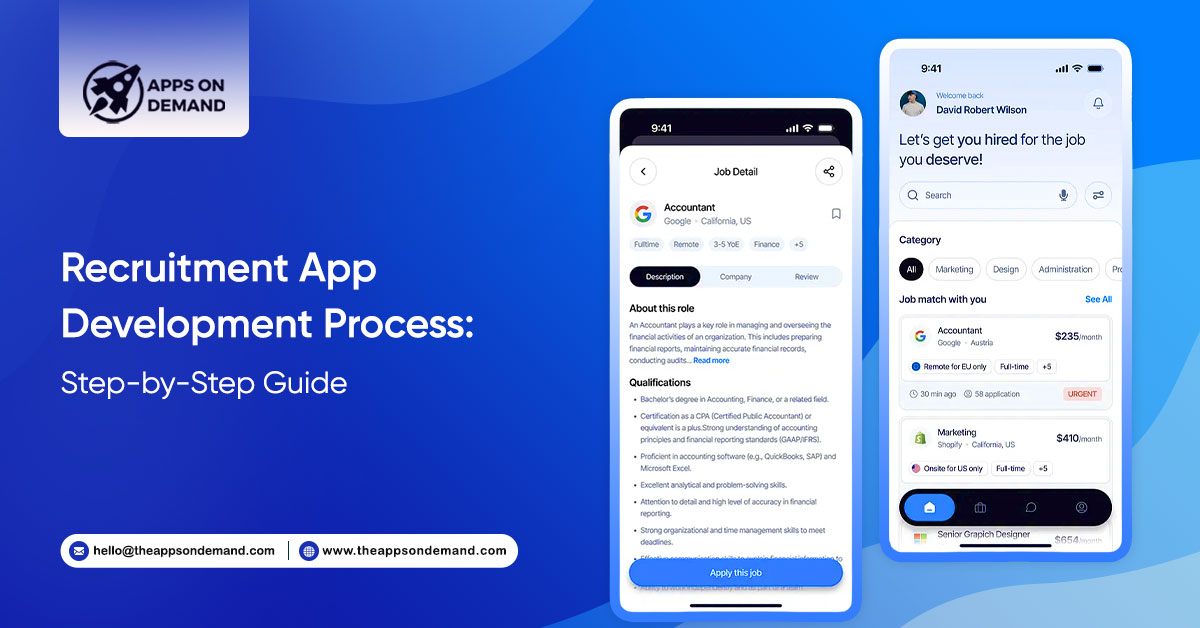
The job portal app development is transforming how businesses connect with job seekers and talent. This blog explores various factors of recruitment app development. It includes the complete process, from ideation to deployment. It also includes the discussion of essential features, including cost considerations and best practices. Discover how bespoke job boards and staffing software can help in streamlining the hiring process, enhancing candidate experience, and assisting with digital-first hiring approaches. This is a highly outlined, process-oriented guide to staffing app development, and it fits reasonably well into your enterprise objectives.
Mobile-first job seekers are reshaping recruitment. More than 65% of all job applications now come from mobile devices. They are emphasizing the importance of mobile-friendly design in staffing app development. This shift highlights why integrating seamless mobile experiences is no longer optional. It is essential for staying competitive.
The recruitment app development puts power in the hands of the applicants and employers. It allows you to post jobs instantly, match employees with the help of AI, and manage applications effortlessly. All this is made available within a mobile environment. These on-the-go capabilities of a job portal app development support efficient hiring and more personalized user journeys. This app development sets a new standard for recruitment platforms.
The Recruitment App Development Process Explained
Recruitment applications are reshaping the HR tech ecosystem by bridging the gap between employers and job seekers. How do we undertake the recruitment app development process? Let us take it step-by-step:
Step 1: Gathering Requirement Data with Market Research
Companies should ensure that they outline the objectives before writing a single line of code. Answers to the questions that businesses should consider:
- What is your target market: corporates, recruitment agencies, or job seekers?
- Is the app intended to be used as a job portal, staffing app, or a talent acquisition platform?
- What shortcomings are there in existing solutions that your app can then fill?
Conduct competition research, engage with job posters, and utilize job fairs. It allows apps to contribute meaningfully. Also, it does not include unnecessary functionalities.
Step 2: Wireframing and Prototyping
A clear visual framework guides development. Wireframes help in:
- Designing work processes (job posting, candidate searching, application monitoring)
- Creating an easy-to-navigate
- Testing how the user would travel before developing in a big way
Prototypes offer direct owner feedback and ensure they align with business requirements.
Step 3: Choosing the Right Technology Stack
The choice of a technology defines scalability, performance, and long-term adaptability.
|
Layer |
Recommended Technologies |
|
Frontend (UI) |
React Native, Flutter, Swift |
|
Backend (APIs & Logic) |
Node.js, Django, Ruby on Rails |
|
Database |
PostgreSQL, MongoDB, MySQL |
|
Cloud Hosting |
AWS, Google Cloud, Azure |
|
AI/ML (Smart Matching) |
TensorFlow, PyTorch |
|
Integrations |
Payment Gateways, Video APIs, ATS Integration |
The appropriate selection of the stack makes it stable and prepares the application to scale with an increase in user demand.
Step 4: Feature Planning and Development
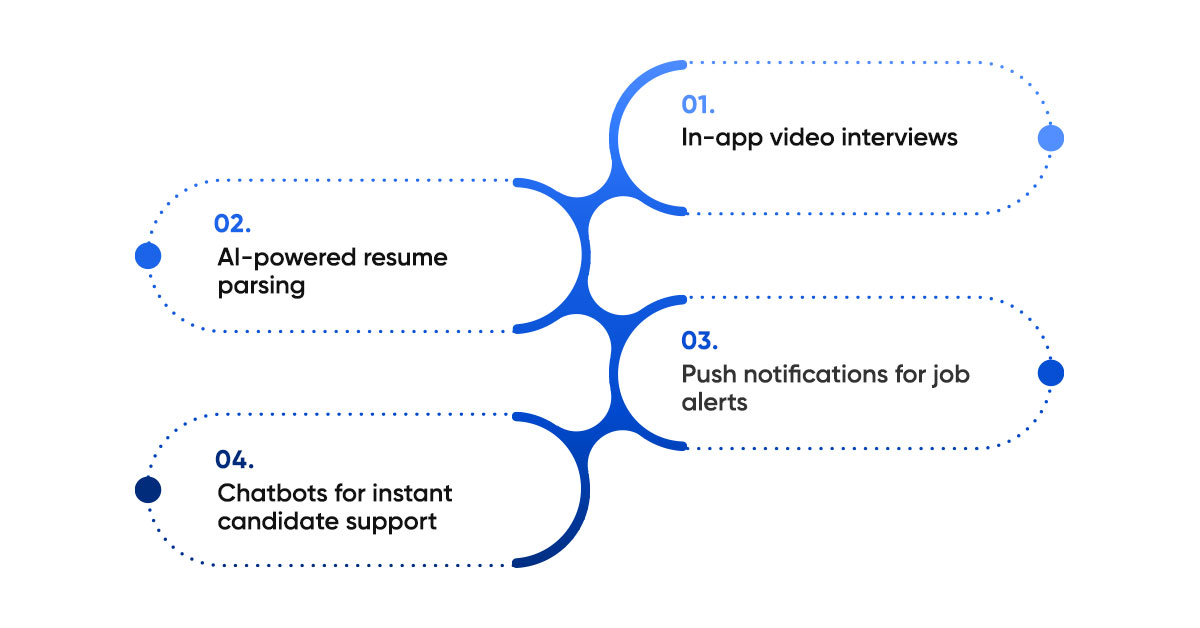
It is also essential to know about various features of a job recruitment app. The core features are:
- For Employers: Ability to post and screen candidates, arrange interviews, and analytics on the dashboard.
- For Candidates: Job creation, resume posting, computerized job recommendations, and online application tracking.
- Panel management: Encompasses Data management, compliance review, fraud prevention, and user monitoring.
Additional Features:
- AI-powered resume parsing
- Chatbots for instant candidate support
- In-app video interviews
- Push notifications for job alerts
Step 5: Talent Acquisition App Development with AI
AI enhances recruitment efficiency by:
- Matching candidates with job descriptions
- Predicting candidate success rates
- Automating resume shortlisting
An AI-powered custom recruitment app is less prone to bias. It reduces reaction time due to the programming of redundant processes.
Step 6: UI/UX Design for Candidate-Centric Experience
Recruitment apps must be intuitive. Key design principles:
- Minimal clicks to apply for jobs
- Mobile-first layouts since 65% of job seekers apply via smartphones
- Gamification features, using progress bars to drive up engagement
Step 7: Development and Iterative Testing
The custom job portal app development process involves:
- Sprint-based Agile development
- Unit and integration testing
- Security testing for sensitive candidate data
AQ guarantees performance even on different devices and operating systems.
Step 8: Deployment and Ongoing Maintenance
After the development, apps are uploaded to iOS and Android stores. Post-deployment:
- Analyze the performance of the monitor through the analytics tools
- Make ongoing notifications of security patches
- Add new capabilities as the needs of users change
The resulting support guarantees the app’s continued success in a vibrant job market.
Key Considerations in Recruitment App Development
Cost to Develop a Recruitment Application
The overall investment for recruitment app development depends on multiple factors, including:
- App complexity
- Platform choice
- Third-party integrations
- Development team expertise
Let’s understand the advanced app features. They are:
- AI-powered matching
- Analytics dashboards
- In-app video interviews
The cost of the app features is usually higher than that of basic platforms.
Businesses must also consider costs in relation to long-term value as opposed to focusing on one figure. A properly developed recruitment application not only eases the hiring app development process but also minimizes operational costs, increases candidate satisfaction, and provides positive ROI in the long term.
Benefits of On-Demand Recruitment Apps
Recruitment apps are changing the traditional recruitment process. An on-demand job portal app development company is making the process faster, convenient, and practical. These apps simplify the recruitment processes for companies and provide talented candidates with a better experience.
Faster Hiring Cycles
- Automates the process of shortlisting and screening of candidates
- Manages the time to hire through immediate notifications and tracking of applications
- Eliminates manual HR work processes to free up HR teams to address high-priority activities
Enhanced Candidate Experience
- Mobile-savvy application process and real-time updates
- AI-based job recommendations, based on the skills and wishes of the candidates
- Customized alerts will keep applicants activated
The on-demand recruitment app ensures businesses have the right talent hired efficiently and professionally. It enables workflow simplification and interaction enhancement.
Why Businesses Choose Staffing App Development?
Staffing apps are ideal for companies looking to manage the hiring of temporary, contract, or seasonal employees. These programs ensure the management of the workforce and increase the transparency of the operations.
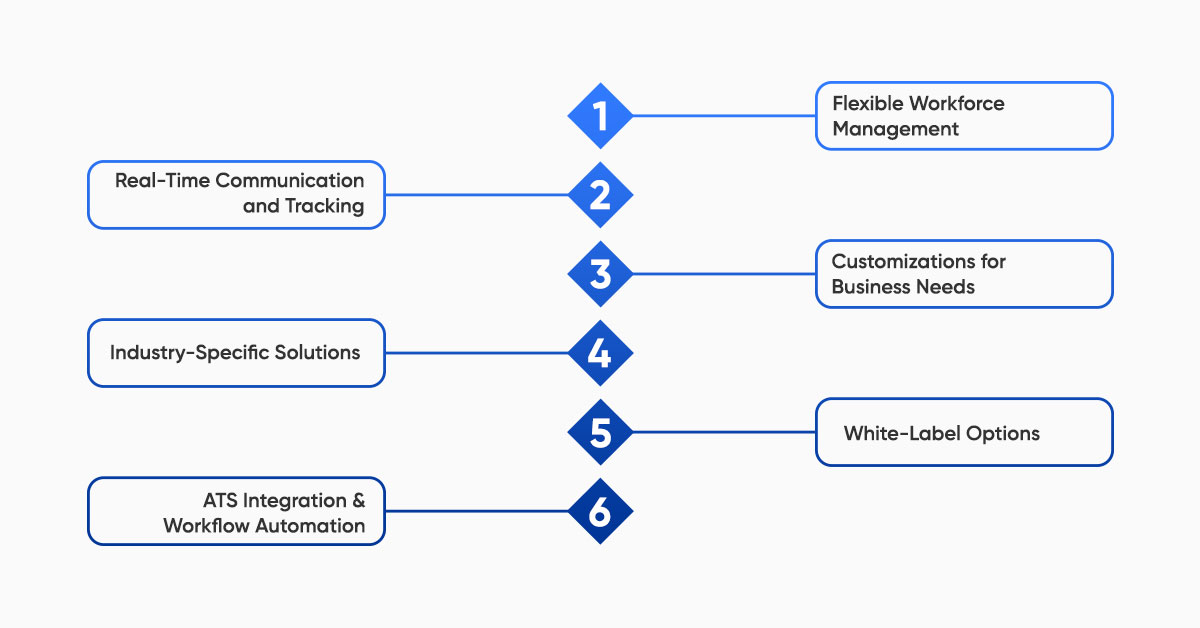
Flexible Workforce Management
Flexible workforce management allows the staff to be scheduled and tracked in terms of availability. It enables the use of shift-based or project-based hiring and lowers administrative overhead by automating.
Real-Time Communication and Tracking
Real-time communication and tracking aids to provide Real-time updates on any job opening or shift changes. The push messages ensure that they inform the staff. The dashboard analytics provide insights into workforce utilization.
Staffing app development helps organizations scale operations quickly while maintaining control over workforce allocation and performance.
Customizations for Business Needs
Any recruitment application must be versatile and be able to accommodate the personalised requirements of companies in any part of the world. A recruitment app development process enables businesses to customize a platform tailored to their specific hiring and branding needs.
Industry-Specific Solutions
- It is tailored for workflows for sectors like IT, healthcare, and logistics.
- It offers custom modules based on hiring patterns and compliance requirements.
- This solution offers streamlined tools for niche recruitment needs.
White-Label Options
White-labelling offers branding flexibility to reflect the company’s identity. It is a configurable interface that can match corporate colors, logos, and style guides.
ATS Integration and Workflow Automation
- Complete integration with Applicant Tracking Systems (ATS)
- Typically automates routine recruitment tasks to increase efficiency
Tailored recruitment apps provide a more efficient screening process and ensure the system aligns with the organization’s evolving workforce needs.
Key Challenges in Recruitment App Development: How to Overcome Them?
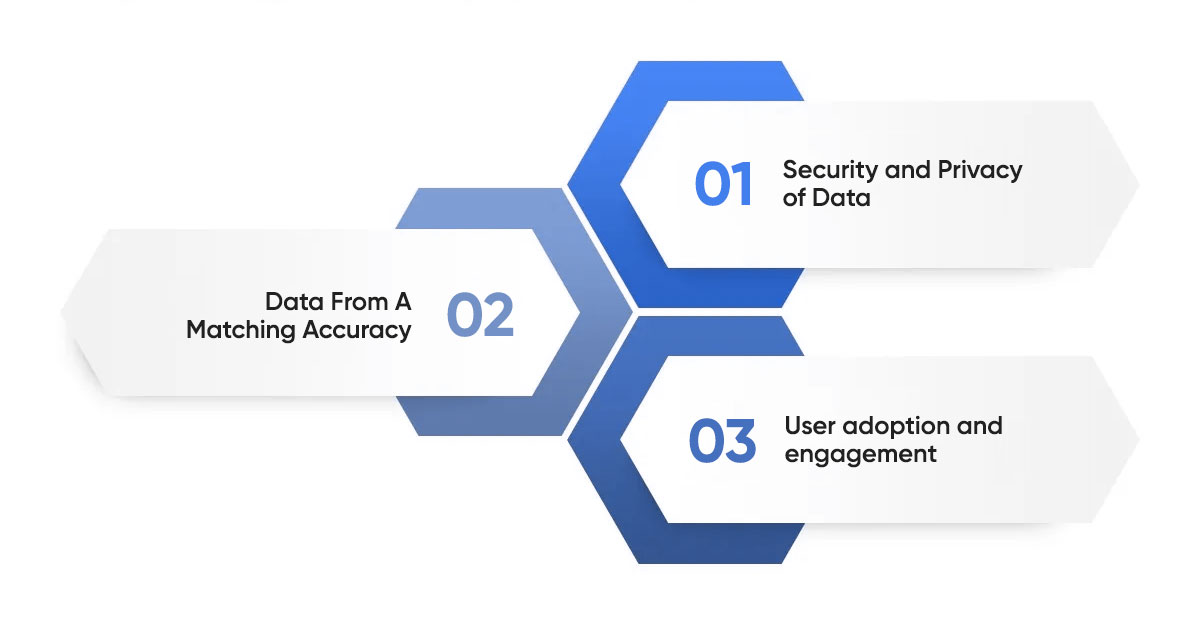
Some of the significant considerations that are needed in the recruitment app development include the following. There is no need to think about them at a late stage of development, as this will positively impact and ease the development process, and will give the users a better experience.
Security and Privacy of Data
- Encrypt sensitive candidate and employer data using high-grade security.
- Provide adherence to local and international privacy regulations on data.
Data From A Matching Accuracy
- Repeatedly learn algorithms to fine-tune candidate-job matching.
- Constantly refine AI models based on actual user feedback and data.
User adoption and engagement
Integrations enhance functionality by providing additional information relevant to car rentals and smoothen the operational process.
- Create user-friendly interfaces for the recruiters and candidates.
- Use push notifications and custom alerts to keep users engaged.
Proactiveness in dealing with these challenges makes your application security efficient and adoptable by both the employer and job seekers.
Conclusion
Staffing app development is no longer just an option. It is an imperative among companies that face the competitive hiring environment today. A well-formulated app enhances not only the efficiency of the recruitment process and interaction with the customers but also provides measurable corporate output. At least a crystallized course of action is a necessity to success, whatever your enterprise may be.
You may prefer a stand-alone job portal application, a recruitment application, or a talent acquisition application. Strict adherence to the development roadmap will keep the development process easy. Engaging the services of professionals such as TheAppOnDemand will be of value in terms of job portal app development packages. It also provides a scalable technology and revolutionary features. An effective plan will help companies make hiring a pleasure. This plan can match the best talent with opportunities.