

Quick Summary :
- Furniture store apps now focus on AR-led visualization, smooth UX, and scalable architecture to improve buying confidence and reduce returns.
- Scalable backend and modular architecture are critical to handle large catalogs, high traffic, and future feature expansion.
- Choosing the right furniture app development partner ensures long-term growth, better performance, and faster time to market.
We are living in an online world, and no matter what you are selling, you have to have an online presence. And, selling furniture is no different.
You don’t just need a beautiful showroom; you need to show up exactly where your customers are scrolling, browsing, and comparing. From sofas and beds to custom-made pieces, buyers now expect a smooth, app-first experience that lets them explore collections, visualize products, and place orders without friction.
That’s where furniture store app development becomes a game-changer for modern furniture brands looking to grow beyond physical stores.
Did you know, the global e-commerce furniture market is projected to grow from about $34.6 billion in 2024 to $36.99 billion in 2025 with a CAGR of ~6.9%, and reach around $48.4 billion by 2029.
A well-planned furniture shopping app development strategy helps you bridge the gap between offline and online retail.
Still not sure about the furniture store app development? Or maybe looking for more insights on furniture store app features, furniture app development cost, proven scaling practices, how to choose the furniture app development company, and beyond, then this blog is all you need.
What Is Furniture Store App Development?
Furniture Store App Development simply means creating a mobile or web app that allows furniture businesses to sell their products online. Instead of customers visiting a physical showroom, they can browse furniture collections, view product details, compare prices, and place orders directly from their phones or laptops.
A furniture store app brings everything together in one place: product catalogs, images, sizes, materials, pricing, and secure payments.
For furniture brands and retailers, this type of app helps reach more customers, support online and in-store sales together, and scale the business faster.
In short, furniture store app development turns a traditional furniture business into a digital-ready, always-open store designed for today’s online shoppers. Many D2C furniture brands use mobile apps to reduce showroom dependency while increasing repeat purchases and average order value.
Must-Have Features for a High-Performing Furniture Store App
A high-performing furniture store app focuses on making browsing easy, buying confident, and scaling smoothly. Here are the essential features that matter most for modern furniture brands.
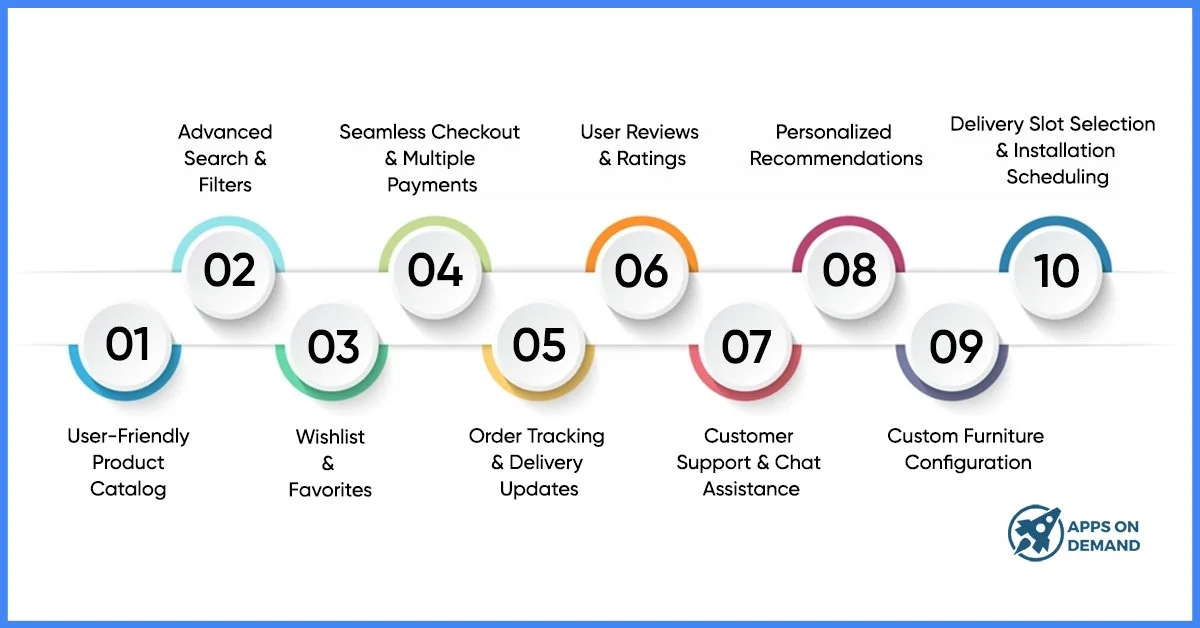
1. User-Friendly Product Catalog
A clean, easy-to-browse catalog that lets users browse by category, room type, price, material, or style is the foundation of furniture store app development. With High-quality images, zoom options, and clear product descriptions, it helps customers make quicker decisions.
2. Advanced Search & Filters
Smart search with filters is a must in furniture ecommerce app development, like size, color, price range, availability, and ratings improve discoverability and reduce drop-offs, especially for large furniture inventories.
3. Wishlist & Favorites
Furniture shopping takes time. In online furniture shopping experience, wishlists let users save items, compare options later, and return when they’re ready to buy, supporting longer buying cycles.
4. Seamless Checkout & Multiple Payments
A smooth checkout experience with multiple payment options (cards, mobile payments, wallets, BNPL) reduces cart abandonment and builds trust.
5. Order Tracking & Delivery Updates
Real-time order status, delivery timelines, and notifications keep customers informed and reduce support queries.
6. User Reviews & Ratings
Reviews and ratings play a big role in furniture app development. Authentic reviews, photos from buyers, and ratings help new customers trust your products and brand.
7. Customer Support & Chat Assistance
In-app chat, FAQs, and support tickets make it easy for users to ask questions about dimensions, delivery, or customization.
8. Personalized Recommendations
AI-driven suggestions based on browsing behavior, room preferences, and past purchases increase engagement and average order value.
9. Custom Furniture Configuration
Let users customize size, fabric, color, finish, or material directly in the app. This is especially valuable for made-to-order or premium furniture brands and improves conversion for high-value products.
10. Delivery Slot Selection & Installation Scheduling
Letting users choose delivery dates, time slots, and installation services improves the post-purchase experience and supports smoother operations in furniture retail app development.
How AR Features Improve Furniture App Shopping?
AR (Augmented Reality) has changed the way people shop for furniture by removing guesswork and building confidence before purchase. In furniture store app development, AR features help customers visualize products in their own space, which directly improves user experience and conversion rates.
Here’s how the right AR furniture app features make a real difference.
1. Real-Time Furniture Placement
AR allows users to place sofas, beds, tables, or chairs directly into their room using their phone camera. This helps shoppers instantly see how a product fits in their space, making furniture shopping app development more interactive and trustworthy.
2. True-to-Scale Size Visualization
With accurate dimensions, AR shows furniture in real size. Users can check spacing, walking areas, and proportions, reducing the risk of buying furniture that’s too big or too small.
3. 360° 3D Product View
AR-powered 3D models let users rotate and view furniture from every angle. This gives a better sense of design, build quality, and detailing compared to static images in a typical furniture ecommerce app.
4. Material, Color & Finish Preview
Users can switch between fabrics, colors, and finishes in real time. This feature improves personalization and works especially well in custom furniture store app development.
5. Room Compatibility Check
AR helps users see how furniture matches existing décor, flooring, and wall colors. This makes styling decisions easier and improves overall satisfaction with the purchase.
6. Multi-Product Room Visualization
Advanced AR features allow users to place multiple furniture items in one room. This supports complete room planning and enhances the experience in an online furniture store app.
When implemented correctly, AR doesn’t just look impressive; it solves real shopping problems like wrong purchases, fitting, higher returns, etc. For modern furniture brands, adding AR features turns a standard furniture app into an immersive and high-conversion shopping experience that customers genuinely enjoy.
Creating an Omnichannel Experience With a Furniture App
In furniture retail, customers rarely follow a straight path to purchase.
- They might browse products on a website,
- save items on a mobile app,
- visit a physical store to see finishes,
- and then complete the purchase later online.
That’s where an omnichannel furniture retail experience becomes essential, and a well-built furniture app plays a central role in making it seamless.
A furniture app acts as the connector between all channels. It syncs product catalogs, pricing, availability, and customer preferences across online and offline touchpoints, so shoppers never feel like they’re starting over. Whether a customer adds a sofa to their wishlist on the app, checks dimensions in-store, or tracks delivery after purchase, everything feels consistent and connected.
From a business perspective, omnichannel furniture retail improves engagement and conversions. Customers get a smoother journey, while brands gain better visibility into browsing behavior, preferences, and buying patterns across channels. When the app supports features like saved carts, personalized recommendations, in-store pickup, and real-time inventory updates, it turns fragmented interactions into one continuous experience.
In short, creating an omnichannel experience with a furniture app isn’t just about being present everywhere; it’s about making every interaction feel unified, effortless, and designed around how customers actually shop today.
Admin & Backend Features for Managing a Scalable App
Building a scalable app isn’t just about the user experience; it’s equally about what happens behind the scenes. Strong admin and backend capabilities are critical in furniture store app development to manage growth, automate operations, and support omnichannel furniture retail smoothly. Together, these backend capabilities reduce operational overhead and allow furniture brands to scale without operational bottlenecks.
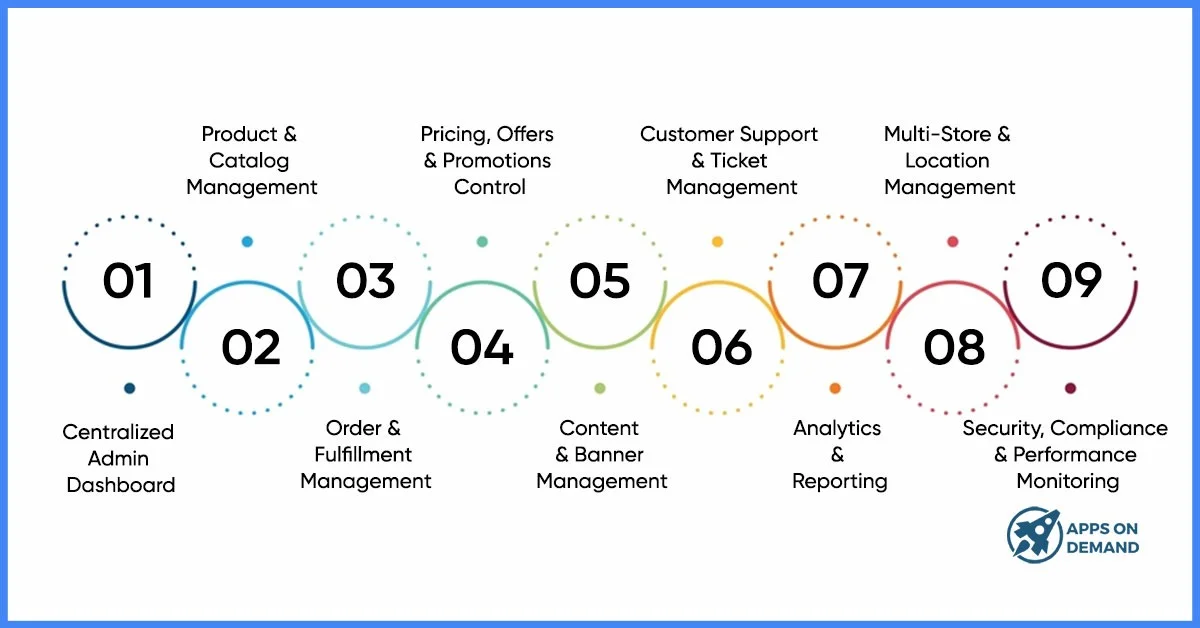
Here are the key admin & backend features every scalable furniture app should have.
1. Centralized Admin Dashboard
A single dashboard gives complete visibility into products, orders, users, payments, and performance. This is the control center for any furniture e-commerce app development project.
2. Product & Catalog Management
Easily add, edit, or remove products, manage categories, upload images, and update pricing. This keeps the online furniture store app updated and aligned with inventory changes.
3. Order & Fulfillment Management
Track orders from placement to delivery, manage cancellations, returns, and exchanges, and coordinate with logistics partners for smooth fulfillment.
4. Pricing, Offers & Promotions Control
Create discounts, seasonal offers, coupons, and dynamic pricing rules to boost conversions in furniture shopping app development.
5. Content & Banner Management
Update homepage banners, featured collections, and promotional content without developer dependency, useful for fast-moving campaigns.
6. Customer Support & Ticket Management
Manage chat queries, support tickets, and service requests from one place, improving response times and customer satisfaction.
7. Analytics & Reporting
Track sales trends, popular products, conversion rates, cart abandonment, and customer behavior to make data-driven decisions in furniture app development.
8. Multi-Store & Location Management
Handle multiple stores, warehouses, or seller panels from one backend—ideal for scaling a furniture marketplace app.
9. Security, Compliance & Performance Monitoring
Features like data encryption, role-based access, audit logs, and performance monitoring keep the platform secure and reliable as traffic grows.
With the right admin and backend setup, a furniture app becomes easier to manage, faster to scale, and better equipped to support long-term business growth without operational chaos.
Scalable App Architecture Best Practices
When you’re building a furniture app, scalability shouldn’t be an afterthought. The right architecture ensures your app stays fast, stable, and flexible, even as users, products, and orders grow.
1. Use a Modular Architecture (Microservices-Friendly)
Instead of building everything as one big system, break features like catalog, payments, orders, and users into separate modules. This makes furniture ecommerce app development easier to scale, update, and maintain without affecting the entire app.
2. Cloud-Based Infrastructure
Cloud hosting allows your app to handle traffic spikes during sales or festive seasons. It also supports automatic scaling, which is essential for growing furniture retail app development projects.
Expert Tip: Use auto-scaling rules based on real user behavior, not just traffic volume, to control cloud costs effectively.
3. API-First & Headless Approach
An API-driven setup lets your app connect seamlessly with mobile apps, web apps, POS systems, and third-party tools. This approach works perfectly for omnichannel and online furniture store app experiences.
4. Scalable Database Design
Use databases that can handle large product catalogs, images, and user data efficiently. Proper indexing, caching, and data partitioning help maintain performance as your furniture shopping app grows.
5. Caching for Faster Performance
Cache frequently accessed data like product listings and images to reduce server load and improve speed, especially important for image-heavy furniture apps.
6. Load Balancing & Traffic Management
Distribute traffic across multiple servers to prevent downtime during high usage. This keeps your app responsive and reliable during peak shopping hours.
Tip to consider: Combine load balancing with real-time monitoring to detect traffic spikes before they affect user experience.
7. Third-Party Integrations with Flexibility
Design your backend to easily integrate with payment gateways, logistics providers, CRM, and ERP systems. This flexibility supports long-term scaling in custom furniture store app development.
8. Security & Compliance Built-In
Scalable architecture also means secure architecture. Implement encryption, role-based access, and secure APIs to protect customer and business data as the app grows.
By following these scalable app architecture best practices, furniture brands can build apps that grow confidently, handle increasing demand, and support long-term digital retail success.
Technology Stack for Furniture Store App Development
|
Layer |
Sub-Component |
Purpose of the Furniture App |
AR / Smart Features |
Common Technologies |
|
Front-End (Customer App) |
Mobile UI |
Browse furniture, add to cart, checkout |
Personalized layouts & quick previews |
Flutter, React Native |
|
Web UI |
Online furniture store experience |
Smart UI interactions |
React.js, Next.js | |
|
AR Product Viewer |
Visualize furniture in real space |
Real-size AR placement & rotation |
ARKit, ARCore, WebAR | |
|
Product & Catalog Layer |
Product Listing Engine |
Manage categories & collections |
Smart product grouping |
Headless CMS, APIs |
|
Search & Filters |
Fast product discovery |
Auto-suggestions & smart filters |
Elasticsearch, Algolia | |
|
Customization Layer |
Furniture Configurator |
Select size, fabric, color, and finish |
Live AR-based customization |
Unity, Three.js |
|
Backend Services |
Business Logic |
Orders, users, pricing, cart |
Smart rule-based workflows |
Node.js, Django |
|
Order Management |
Track orders & delivery |
Status automation & alerts |
REST / GraphQL APIs | |
|
Database Layer |
Product & User Data |
Store catalogs & images |
Optimized for AR assets |
PostgreSQL, MongoDB |
|
Cache Layer |
Speed up performance |
High-demand product caching |
Redis | |
|
Admin & Operations |
Admin Dashboard |
Inventory, pricing, promotions |
Data-driven insights |
React.js, Angular |
|
Analytics & Reports |
Sales & behavior tracking |
Trend & demand visibility |
Google Analytics, Mixpanel | |
|
Payments & Security |
Payment Gateway |
Secure checkout |
Risk & payment validation |
Stripe, Razorpay, UPI APIs |
|
Cloud & Infrastructure |
Hosting & Scaling |
Performance & uptime |
Auto-scaling support |
AWS, Azure, GCP |
Furniture Store App Development Cost Breakdown
|
Feature Scope |
Local / D2C Furniture Brand |
Multi-Store Furniture Retailer |
Marketplace / Enterprise Brand |
|
Estimated Cost Range |
$20K – $35K |
$40K – $70K |
$85K – $150K+ |
|
Customer Mobile App (iOS & Android) |
✓ |
✓ |
✓ |
|
Web Storefront |
✓ (basic) |
✓ |
✓ |
|
Product Catalog & Categories |
✓ |
✓ |
✓ |
|
Basic Search & Filters |
✓ |
✓ |
✓ |
|
Advanced Search & Smart Filters |
✗ |
✓ |
✓ |
|
Wishlist & Favorites |
✓ |
✓ |
✓ |
|
Cart & Checkout Flow |
✓ |
✓ |
✓ |
|
Multiple Payment Options |
✓ |
✓ |
✓ |
|
Order Tracking & Notifications |
✓ |
✓ |
✓ |
|
Customer Reviews & Ratings |
✓ |
✓ |
✓ |
|
AR Furniture Visualization |
✗ |
✓ (single product view) |
✓ (multi-product room view) |
|
3D Product Models |
✗ |
✓ |
✓ (high-fidelity models) |
|
Custom Furniture Configuration |
✗ |
✓ (limited options) |
✓ (advanced customization) |
|
Delivery Slot Selection |
✗ |
✓ |
✓ |
|
Installation Scheduling |
✗ |
✓ |
✓ |
|
Admin Dashboard |
✓ (basic) |
✓ (advanced) |
✓ (data-driven & role-based) |
|
Inventory Management |
✓ (single warehouse) |
✓ (multiple stores) |
✓ (warehouses + sellers) |
|
Analytics & Reporting |
✓ (basic sales data) |
✓ (customer & product insights) |
✓ (predictive & trend analysis) |
|
Omnichannel Support (Online + Store) |
✗ |
✓ |
✓ |
|
Multi-Vendor / Seller Management |
✗ |
✗ |
✓ |
|
ERP / CRM Integrations |
✗ |
✓ (limited) |
✓ (full-scale) |
|
Cloud Auto-Scaling |
✗ |
✓ |
✓ |
|
High-Traffic Performance Optimization |
✗ |
✓ |
✓ |
|
Enterprise Security & Compliance |
✓ (standard) |
✓ (enhanced) |
✓ (enterprise-grade) |
|
Multi-Region / Global Support |
✗ |
✓ (regional) |
✓ (global) |
Common Mistakes That Limit Furniture App Scalability
If you’re investing in furniture store app development, being aware of these common pitfalls can save time, cost, and future rework.
1. Building a Monolithic Architecture Too Early
Starting with a tightly coupled system makes updates and scaling difficult as traffic grows. In furniture ecommerce app development, this often leads to performance issues when product catalogs and orders increase.
2. Ignoring Scalability During MVP Development
Treating an MVP as a temporary build often results in redoing the entire app later. Even for a basic online furniture store app, the backend should be designed with scalability in mind from day one.
3. Underestimating Image & AR Performance Needs
Furniture apps rely heavily on high-resolution images and AR features. Poor optimization in furniture shopping app development can slow load times and frustrate users.
Expert tip: Optimize images and AR assets early using compression, lazy loading, and CDN delivery; this has a direct impact on conversions.
4. Overloading the App with Features Too Early
Adding advanced features before validating core workflows can hurt performance and user experience. Scalable furniture app development focuses on stability first, enhancements later.
5. Skipping Performance Testing Under Load
Many apps work fine with a few users but break under traffic spikes. Load testing is critical for furniture store app development, especially during sales or festive seasons.
6. Choosing the Wrong Development Partner
A team without experience in furniture app development may overlook AR optimization, catalog complexity, or omnichannel needs, leading to costly fixes later.
Furniture Store App Development Trends in 2026
As furniture brands and retailers continue to build digital experiences, certain trends are shaping how customers shop, interact, and decide online. These trends aren’t just buzzwords; they’re rooted in real data and shifting consumer behavior that will define furniture store app development in 2026 and beyond.
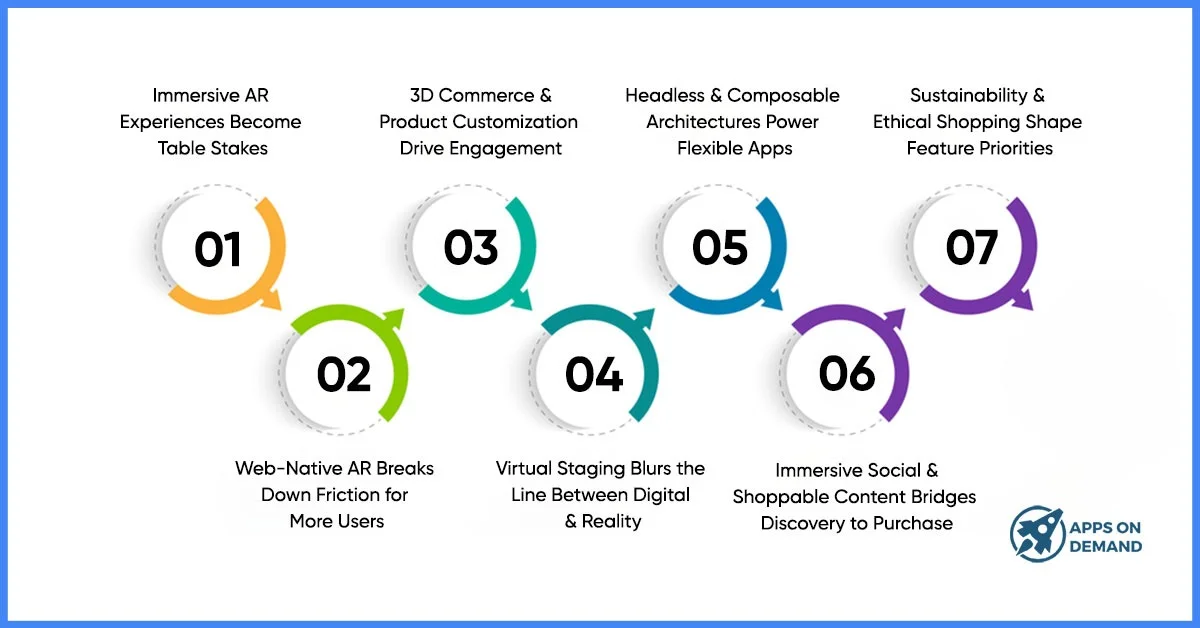
1. Immersive AR Experiences Become Table Stakes
In 2026, AR isn’t just a flashy add-on; it becomes a core part of how people shop for furniture. Shoppers will use their phone camera or browser to place virtual furniture in their own rooms in real time, getting true-to-scale context before they buy.
Products featuring 3D/AR content see about 94% higher conversion rates compared to those without it. This cuts hesitation, boosts confidence, and can significantly increase conversions and reduce returns.
2. Web-Native AR Breaks Down Friction for More Users
Instead of forcing users to download an app to use AR, furniture brands will lean into web-native AR that works instantly in a browser. This means anyone can try placing furniture in their space without barriers, helping brands reach more shoppers with less friction.
3. 3D Commerce and Product Customization Drive Engagement
More apps will move beyond photos to interactive 3D models where users can spin, view, and customize furniture. In many emerging experiments, companies combine this with configurators that let customers tweak size, color, and finishes right in the app, and people are willing to pay a premium for that level of customization.
4. Virtual Staging Blurs the Line Between Digital and Reality
Virtual staging tools help users not just place single items, but curate entire rooms to match their decor. This trend expands the furniture app experience from browsing products to planning spaces, giving users a deeper connection to how pieces will feel in their home.
5. Headless and Composable Architectures Power Flexible Apps
Forward-thinking furniture apps will adopt headless commerce, a backend separated from the frontend, so they can deliver experiences anywhere: mobile app, web, smart displays, or VR showrooms. This flexibility makes app experiences faster, more personalized, and easier to evolve, keeping them future-ready.
6. Immersive Social and Shoppable Content Bridges Discovery to Purchase
Social platforms will continue influencing furniture shopping, with real-time video showrooms, shoppable livestreams, and mixed reality snippets pushing users from inspiration to checkout without leaving the app. These experiences make product discovery more interactive and organically tied to lifestyle content.
7. Sustainability & Ethical Shopping Shape Feature Priorities
As consumers increasingly value eco-friendly choices, furniture apps will start integrating sustainability filters (e.g., materials, carbon footprint) and responsible sourcing badges. These features help users align purchases with values and drive deeper brand affinity, especially among conscious consumers.
Choosing the Right Furniture Store App Development Company
1. Look for a furniture-specific app development experience
Furniture apps come with unique challenges, large catalogs, high-quality visuals, AR features, and complex delivery workflows. The right furniture store app development company should already understand these needs instead of figuring them out during your project.
2. Choose a team that thinks beyond features
A good development partner focuses not just on what the app does today, but how it scales tomorrow. This includes planning the right architecture, performance optimization, and future-ready integrations as your furniture business grows.
3. Prioritize a consultative, not just technical, approach
The best teams guide you on feature prioritization, what to build now, what to phase later, and how to align the app with your business goals.
4. Ensure strong expertise in AR, UX, and performance
Modern furniture apps rely heavily on visuals and AR experiences. Your development partner should know how to optimize images, AR assets, and load times to deliver a smooth shopping experience.
5. Check scalability and post-launch support capabilities
Furniture apps evolve continuously. From adding new categories to handling sales traffic and new features, ongoing support and optimization are just as important as the initial build.
6. Work with a team that understands end-to-end app development
From UI/UX design and backend development to integrations and deployment, having everything handled under one roof reduces friction and speeds up execution.
If you are looking for an app development partner who has the experience and expertise with furniture store app development and AR furniture app features, then our team at Apps On Demand has got you covered.
We help furniture brands design, build, and scale custom furniture store apps tailored to their business stage. We focus on clean UX, scalable architecture, immersive features, and beyond that, your users love, and your business deserves.
To ensure your application run smoothy with wearables also test sensor integration and monitor heart rate, GPS, and accelerometer. Plus make sure to check and verify offline functionality and data synchronization across different connected devices.
Following this design, development, and launch strategy for custom fitness app development ensures your fitness app isn’t just functional, but also engaging, differentiated, and scalable.
Conclusion
Building a successful furniture store app is no longer just about going digital; it’s about creating an experience that helps customers visualize better, decide faster, and shop with confidence.
When these pieces come together, your app stops being just another sales channel and starts becoming a long-term growth asset for your brand.
At Apps On Demand, we help furniture brands turn this vision into reality. Our team focuses on understanding your business stage, choosing the right features, and building apps that scale without unnecessary complexity.
If you’re exploring how a custom furniture store app could fit into your growth plans, a simple conversation with our app experts can help you move forward with clarity and confidence