

Quick Summary :
- Grocery app development costs range from $18,000 to $45,000+, depending on features, complexity, and scalability. Advanced apps increase the overall cost.
- Platform choice (Android, iOS, or both), feature complexity (real-time tracking, AI), and customization (UI/UX, backend) significantly affect development costs.
- To manage costs, start with a lean MVP, use cross-platform development, and plan for scalability without overbuilding.
The grocery business has changed. The pandemic shifted consumer behavior permanently. 73% of consumers now expect local stores to offer delivery or pickup options. That expectation isn’t reversing.
A Michigan grocery store owner lost 30% of regular customers in eight months. The reason? No app. But the store two blocks over had one.
That’s the reality of 2026
With customers expecting instant ordering, same-day delivery, and seamless mobile experiences, a grocery app is no longer a nice-to-have. It’s fast becoming a core part of how modern grocery businesses grow, compete, and stay relevant.The real challenge isn’t deciding whether to build a grocery app; it’s understanding the Grocery App Development Cost and what goes into it. And, if you are wondering about it, then keep reading this blog.
Here’s what this covers:
- Must-have grocery app features
- Cost to develop a grocery delivery app
- How to Reduce Grocery App Development Cost in 2026
- Future Trends of Grocery App Development
- How to choose the best grocery delivery app development company
By the end, you will get an entire breakdown to get things started the right way.
What Is Grocery App Development?
Grocery app development is the process of creating a mobile or web application that allows customers to browse grocery items, place orders, make payments, and get groceries delivered or ready for pickup, all through their smartphones.
From a business point of view, grocery delivery app development helps grocery stores move their offline shopping experience into a digital, on-demand model that today’s customers expect.
For example, imagine a local supermarket that currently takes phone orders and WhatsApp messages. By investing in on-demand grocery delivery app development, the store can offer a branded app where customers place orders in seconds, track delivery, and get the convenience they need in 2026.
Behind the scenes, a grocery delivery app developer builds the system so orders automatically reach the store, stock updates in real time, alert store, assign delivery partner, and completes the whole process smoothly.
Key Features That Impact Grocery App Development Cost
The grocery app development cost depends on how advanced your app needs to be. Most grocery businesses fall into one of three categories: a basic app, a mid-level grocery delivery app, or an advanced custom grocery app. Below is a clean breakdown of each level, its cost, and the features included.
1. Basic Grocery App
A basic grocery app is ideal for single-store owners who want to take orders online and offer simple delivery or pickup options.
Estimated Cost: $18,000 – $25,000
Features included:
- Customer registration & login
- Product listing with categories
- Product search & filters
- Cart & basic checkout
- Order placement & order history
- Basic admin panel (manage products, prices, orders)
- Push notifications (order confirmation)
- Payment options (COD + basic online payment)
This setup covers essential grocery delivery mobile app development needs and keeps the cost to develop a grocery delivery app under control.
2. Mid-Level Grocery Delivery App
A mid-level app is suitable for businesses offering regular home delivery or on-demand services and handling higher order volumes.
Estimated Cost: $28,000 – $38,000
Includes all basic app features, plus:
- Delivery management module
- Real-time order tracking
- Delivery partner app or delivery dashboard
- Multiple payment gateways
- Delivery time-slot selection
- Live inventory management
- Offers, discounts, and promo codes
- Detailed admin reports & analytics
This level significantly increases the grocery delivery app development cost, but it supports on-demand development and improves customer experience and operational efficiency.
3. Advanced Custom Grocery App
An advanced app is built for fast-growing or enterprise-level grocery businesses, multi-store chains, or marketplaces.
Estimated Cost: $45,000+
Includes all mid-level features, plus:
- Fully custom grocery delivery app development
- Multi-store or multi-vendor support
- AI-based product recommendations
- Subscription & recurring orders
- Advanced inventory automation
- Route optimization for deliveries
- Third-party integrations (ERP, POS, CRM)
- High-performance backend for large user volumes
- Custom UI/UX branding and scalability
This level requires experienced custom grocery delivery app developers or the best grocery delivery app development company, as it involves complex architecture and long-term scalability.
Factors Affecting Grocery App Development Cost
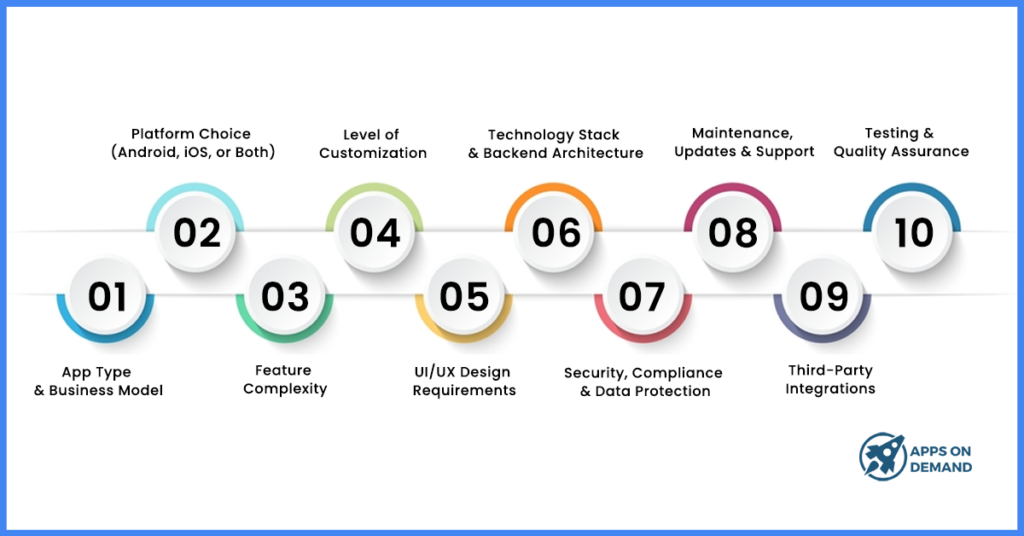
1. App Type & Business Model
Your business model sets the foundation for the entire app and has a major impact on the grocery delivery app development cost.
- A single-store grocery app is simpler, with one inventory, one pricing model, and fewer workflows, making it more affordable.
- A multi-store or marketplace app requires vendor onboarding, commission management, and order routing between multiple stores, which increases development time and cost.
- On-demand grocery delivery app development adds real-time delivery assignment and tracking, making it more expensive than scheduled or pickup-only models.
The more complex the business logic, the higher the development effort and cost.
2. Platform Choice (Android, iOS, or Both)
The platforms you choose directly affect the grocery delivery mobile app development budget.
- Building for one platform (Android or iOS) reduces initial cost.
- Supporting both platforms increases cost but helps reach a larger customer base.
- Cross-platform development can reduce duplication of work, but still requires testing and optimization for each device type.
Platform decisions often account for a significant portion of the grocery app development cost.
3. Feature Complexity
Not all features are equal in terms of cost. Feature depth plays a major role in the grocery delivery app development cost.
- Basic features like product browsing and checkout are easier to build and requires lesser cost.
- Advanced features such as real-time order tracking, live inventory updates, subscriptions, and smart search add backend complexity.
- Each advanced feature requires additional development, testing, and maintenance, increasing the cost to develop a grocery delivery app.
More features also mean longer development timelines.
4. Level of Customization
Customization directly affects both cost and long-term flexibility.
- Ready-made or template-based apps cost less but limit future changes.
- Custom grocery delivery app development allows businesses to tailor workflows, branding, and user journeys to their needs, but increases upfront investment.
Businesses planning long-term growth usually prefer working with custom grocery delivery app developers, even though it raises the initial grocery delivery app development cost.
5. UI/UX Design Requirements
UI/UX design affects both development effort and long-term user engagement, directly influencing the grocery delivery app development cost.
- A basic UI built with standard components requires less design time and frontend effort, keeping costs lower.
- Custom UI/UX with brand-specific layouts, optimized user flows, and interactive elements requires more design iterations and development hours.
- Animations, transitions, and micro-interactions further increase frontend complexity and testing time.
As design complexity increases, the cost to develop a grocery delivery app rises, but it often leads to higher customer retention and repeat usage.
6. Technology Stack & Backend Architecture
The choice of technology stack has a direct impact on performance, scalability, and the grocery delivery app development cost.
- A simple backend is sufficient for basic grocery apps with limited traffic and features, keeping development costs lower.
- On-demand or high-traffic apps require a scalable cloud-based architecture, which increases infrastructure and development costs.
- Advanced databases and APIs are necessary for real-time inventory management, order syncing, and delivery tracking.
Investing in a future-ready stack increases the cost to develop a grocery delivery app initially but reduces performance issues and rework costs as the app scales.
7. Security, Compliance & Data Protection
Security requirements add to the development effort and influence the grocery delivery app development cost.
- Secure authentication and role-based access control require additional backend logic.
- Data encryption and secure storage increase development and testing time.
- Payment compliance standards add extra security layers and audits.
Strong security implementation increases the cost to develop a grocery delivery app, but it is essential for trust, compliance, and long-term stability.
8. Maintenance, Updates & Support
Ongoing maintenance directly affects the total grocery app development cost over time.
- Bug fixes and performance improvements require continuous developer involvement.
- OS updates and platform changes demand regular app updates.
- Security monitoring and patches add recurring technical costs.
- Feature enhancements based on user feedback increase long-term development expenses.
Maintenance typically accounts for 15–25% of the initial grocery delivery app development cost annually, depending on app complexity.
9. Third-Party Integrations
Third-party integrations add essential functionality but also increase development time and grocery delivery app development services.
- Payment gateway integrations are required for secure and seamless transactions.
- Maps and GPS services enable real-time tracking of deliveries and route optimization.
- SMS, email, and push notification services keep customers and delivery partners informed.
- POS, ERP, or CRM integrations are often needed to connect the app with existing store operations.
Each additional integration adds complexity, testing requirements, and ongoing maintenance costs.
10. Testing & Quality Assurance
Testing is essential to ensure the app works smoothly across devices and user scenarios, and it directly impacts the cost of developing the grocery delivery app.
- Basic testing covers core features and requires less time and effort.
- Comprehensive testing includes functional testing, performance testing, security testing, and cross-device testing, which increases development hours.
- Apps with real-time features like inventory sync and delivery tracking require more extensive testing.
Thorough testing raises the cost to develop a grocery delivery app, but reduces post-launch bugs and expensive fixes.
Grocery App Tech Stack & Cost Implications
Below is a clear, business-focused table showing a typical grocery app tech stack and how each layer impacts the grocery app development cost. This helps grocery store owners understand where the budget goes and why certain choices cost more.
| Tech Stack Layer | Common Technologies Used | Why It’s Needed in Grocery Apps | Cost Implications |
| Frontend (Customer App) | React Native, Flutter, Swift (iOS), Kotlin (Android) | Customer browsing, cart, checkout, order tracking | Native apps cost more; cross-platform reduces cost, but still needs optimization |
| Frontend (Admin Panel) | React.js, Angular, Vue.js | Manage inventory, orders, pricing, and reports | Custom dashboards increase development time and cost |
| Backend Development | Node.js, Django, Laravel, Spring Boot | Business logic, order processing, and user management | Complex logic (on-demand, multi-store) increases cost |
| Database | PostgreSQL, MySQL, MongoDB | Store products, users, orders, and inventory | Advanced databases for real-time sync increase backend cost |
| Cloud Infrastructure | AWS, Google Cloud, Azure | Scalability, hosting, performance handling | Cloud-based architecture increases cost but supports growth |
| Payment Gateway | Stripe, Razorpay, PayPal | Secure online payments | Adds integration + compliance cost |
| Maps & GPS | Google Maps API, Mapbox | Delivery tracking, route optimization | API usage and real-time tracking increase ongoing costs |
| Notifications | Firebase, Twilio, SendGrid | Order updates via push, SMS, email | Per-message/API usage costs apply |
| Security Layer | OAuth, JWT, SSL, and encryption tools | Protect payments and user data | Strong security adds development and testing costs |
| Analytics & Reporting | Google Analytics, Mixpanel | Sales tracking, user behavior insights | Advanced analytics increase setup and maintenance costs |
| Third-Party Integrations | POS, ERP, CRM systems | Sync store operations | Each integration adds complexity and cost |
| DevOps & Monitoring | Docker, Kubernetes, CI/CD tools | App stability and uptime | Required for large-scale apps, increases cost |
Hidden Costs in Grocery App Development
When people talk about Grocery App Development Cost, they usually focus on the upfront build price. But in reality, some of the most important costs show up after the app goes live. These are not obvious at the start, yet they directly affect your long-term budget and app performance.
Here are the hidden costs in grocery app development that you should know about:
1. Ongoing Maintenance & Bug Fixes
No app is done after launch. As real users start placing orders, small issues, performance gaps, and unexpected bugs surface.
Regular maintenance is required to fix issues, improve speed, and keep everything running smoothly. This usually costs 15–25% of the initial grocery delivery app development cost per year, and skipping it often leads to bigger and more expensive problems later.
2. Server, Hosting & Cloud Usage Costs
As your app gains users, your server usage increases automatically.
More orders, real-time tracking, push notifications, and peak-hour traffic all consume cloud resources. While hosting costs start small, they grow steadily as your grocery app scales, especially for on-demand grocery delivery apps that handle high traffic in short time windows.
3. Third-Party API Usage Fees
Many core app features rely on paid third-party services.
Payment gateways charge per transaction, maps and GPS APIs charge based on usage, and SMS or notification services charge per message. These costs aren’t visible during development but increase continuously as order volume grows.
4. App Store & Platform-Related Costs
Publishing and maintaining your app on Android and iOS involves ongoing platform expenses.
These include developer account fees, compliance updates, and payment gateway charges. While each cost may seem minor on its own, together they add to the long-term grocery delivery app development cost.
5. Feature Enhancements After Launch
Once customers start using your app, they’ll expect more.
You may need to improve search, add new payment options, refine delivery tracking, or introduce offers and subscriptions. These enhancements aren’t part of the original scope, but they’re essential to stay competitive, adding to the long-term grocery delivery app development cost.
6. Security Updates & Compliance Changes
Security isn’t a one-time investment.
As payment rules, OS versions, and data protection standards evolve, your app needs regular updates. These security changes add ongoing development and testing costs but are critical for protecting customer data and maintaining trust.
Build In-House vs Hire a Grocery App Development Company
If you’re planning grocery delivery app development, one of the biggest decisions you’ll face is whether to build the app in-house or hire the best grocery delivery app development company.
Both approaches have pros and cost implications. Here’s a clear, business-focused comparison table to help you decide.
| Aspect | Build In-House | Hire a Grocery App Development Company |
| Initial Cost | High upfront cost (hiring, salaries, infrastructure) | Predictable project-based cost |
| Time to Market | Slower due to team setup and learning curve | Faster delivery with an experienced team |
| Expertise Required | You need frontend, backend, mobile, QA, and DevOps experts | Ready access to skilled grocery delivery app developers |
| Scalability | Harder to scale quickly | Easy to scale features and team as needed |
| Technology Stack Decisions | You handle architecture and tech choices | Guided by best practices and proven stacks |
| Risk of Rework | Higher risk due to trial-and-error | Lower risk with tested development processes |
| Maintenance & Updates | Ongoing internal cost and team dependency | Often included as part of grocery delivery app development services |
| Long-Term Cost | Can become expensive over time | More cost-efficient for most businesses |
| Focus on Core Business | Distracts from grocery operations | Let’s you focus on growth and operations |
| Best Fit For | Large enterprises with strong tech teams | Startups, SMEs, and growing grocery businesses |
Building in-house gives you full control, but it comes with high costs, longer timelines, and operational complexity. For most businesses, hiring the best grocery delivery app development company is faster, more cost-effective, and better aligned with managing the overall grocery app development cost.
How to Reduce Grocery App Development Cost in 2026?
Building a grocery app in 2026 doesn’t have to mean burning your entire tech budget. With the right decisions early on, you can significantly reduce the Grocery App Development Cost, without cutting corners that hurt growth or user experience.
Here are practical, business-friendly ways to keep your grocery delivery app development cost under control.
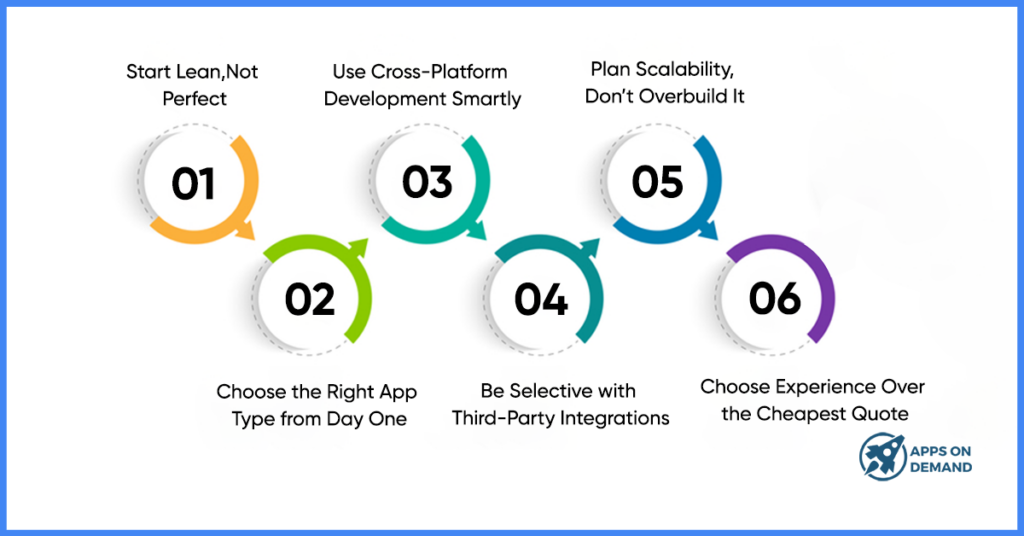
1. Start Lean, Not Perfect
You don’t need every feature on day one.
Start with a solid MVP that covers ordering, payments, and basic delivery. Once real customers start using the app, you’ll know exactly which features are worth investing in. This approach lowers the initial cost to develop a grocery delivery app and avoids building features no one uses.
2. Choose the Right App Type from Day One
A single-store app is very different from a marketplace app.
If you’re running one grocery store, don’t build a multi-store system just in case. Align the app type with your current business model and upgrade later. This alone can save a large chunk of your grocery delivery app development cost.
3. Use Cross-Platform Development Smartly
Building separate apps for Android and iOS can get expensive fast.
Cross-platform frameworks allow you to reuse code and reduce development time. While they still need optimization, they’re a cost-effective option for most grocery businesses in 2026.
4. Be Selective with Third-Party Integrations
Every integration increases both development and ongoing costs. Start with only the essentials: payment gateways, maps for delivery tracking, and basic notifications. Advanced tools like CRM systems, loyalty engines, or marketing automation can wait until your operations actually require them.
By integrating only what you truly need, you reduce the initial grocery delivery app development cost and avoid unnecessary recurring fees.
5. Plan Scalability, Don’t Overbuild It
Yes, your grocery app should scale, but that doesn’t mean paying for enterprise-level infrastructure from day one.
Choose a tech stack that supports growth, but configure it for your current usage levels. Overbuilding increases cloud, backend, and maintenance costs early on without delivering immediate value.
6. Choose Experience Over the Cheapest Quote
The lowest development quote often becomes the most expensive in the long run.
An experienced grocery app development team helps you avoid poor architecture, unnecessary features, and rework. While the upfront cost may be slightly higher, it significantly reduces long-term expenses related to fixes, redesigns, and performance issues.
Choosing the best grocery app development company helps control the grocery delivery app development cost over time.
Future Trends of Grocery App Development.
Grocery apps in 2026 are no longer just about placing orders; they’re becoming smarter, faster, and far more personalized. As customer expectations rise and competition tightens, these trends are shaping how grocery delivery app development will evolve next.
Here are the key future trends every grocery business should watch closely.
1. Predictive Shopping Will Replace Manual Reordering
Grocery apps are moving beyond recommended items to anticipating needs.
Instead of waiting for customers to search:
- Apps predict when staples are about to run out
- Carts are pre-filled based on buying patterns
- Users get timely reminders, not random notifications
This trend is becoming core to custom grocery delivery app development. While it slightly increases the grocery app development cost, it drives higher repeat orders without relying on discounts.
2. Smarter Inventory Decisions at the Store Level
Fast delivery is no longer just about riders; it’s about where the order is fulfilled from.
Modern on-demand grocery delivery app development focuses on:
- Picking the nearest store with available stock
- Avoiding out-of-stock cancellations
- Reducing delivery time automatically
To support this, grocery delivery app developers are building more intelligent backend systems. It adds backend complexity and impacts the grocery delivery app development cost, but it directly improves reliability and customer trust.
3. Reordering Will Matter More Than Browsing
Repeat customers don’t want to browse; they want speed. Future grocery delivery mobile app development is shifting toward:
- One-tap reorders
- Buy again shortcuts
- Smart bundles based on past orders
This reduces friction and keeps customers coming back. From a cost perspective, it’s less about heavy UI changes and more about smarter data handling, making it a high-ROI feature in grocery delivery app development services.
4. Quick Commerce Will Shape App Architecture
Grocery apps are being built around speed-first logic, not just ordering:
- 10–30 minute delivery promises
- Dark stores and micro-warehouses
- Real-time stock and rider availability
This trend is pushing on-demand grocery delivery app development toward more complex backend systems. It increases the grocery delivery app development cost, but for urban and high-demand markets, it’s becoming a competitive necessity.
5. Subscription-Based Grocery Ordering Will Go Mainstream
Subscriptions are no longer limited to Netflix. Future grocery delivery app development services are enabling:
- Weekly and monthly grocery subscriptions
- Flexible skip, pause, or reschedule options
- Dynamic pricing based on order frequency
This trend improves predictable revenue for businesses. While it adds logic and backend workflows, impacting the cost to develop a grocery delivery app, it significantly boosts customer lifetime value.
6. Sustainability Features Will Influence Buying Decisions
Customers are paying closer attention to how groceries are delivered.
Grocery apps are starting to include:
- Eco-friendly delivery options
- Minimal or reusable packaging indicators
- Carbon-conscious delivery suggestions
For businesses investing in custom grocery delivery app development, sustainability features are becoming part of brand trust. They don’t significantly increase the cost of grocery app development, but they influence long-term loyalty and brand perception.
Conclusion
As we’ve seen throughout this guide, the Grocery App Development Cost depends on many factors, from features and tech stack to scalability, maintenance, and future-ready trends. The key is not to build everything at once, but to build what makes sense for your grocery business today and leave room to grow tomorrow.
Smart planning, the right feature set, and an experienced development partner make all the difference in managing the cost to develop a grocery delivery app effectively.
With years of hands-on experience building on-demand and grocery delivery apps for startups and growing businesses, our team understands what works in real-world grocery operations and not just on paper.
If you’re looking for reliable grocery delivery app development services, our team at Apps on Demand can help. From strategy and design to scalable development, we work closely with businesses to build grocery apps that are practical, future-ready, and aligned with real business goals.
In short, grocery apps that win in 2026 won’t be the most complex; they’ll be the most thoughtful. And with the right team by your side, building one becomes a lot simpler.