

How On-Demand Ride-Hailing Apps Are Using Real-Time Data to Reduce Driver Idle Time
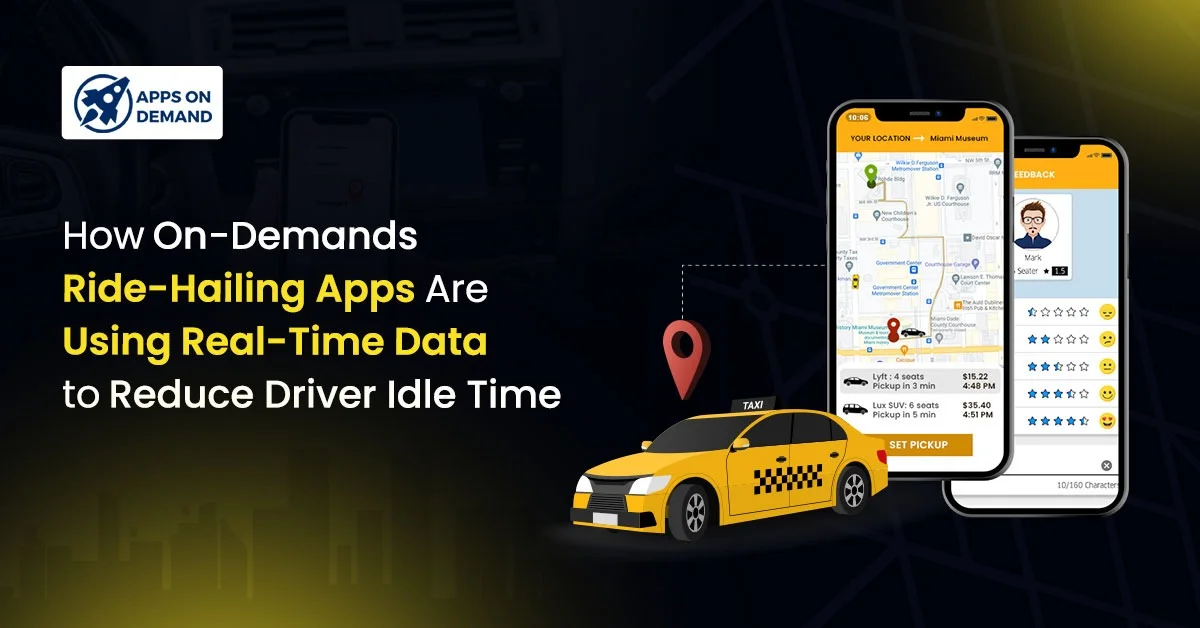
The on-demand ride-hailing industry has greatly impacted the mobility of urban areas by providing speed, convenience, and flexibility. However, one of the difficulties that driver idle time poses to these platforms is one of the major obstacles. It leads to loss of efficiency at the platforms, lower earnings for drivers, and longer wait times for customers when drivers are waiting without passengers. From my extensive research, I conclude that the main answer is real-time data. Nowadays, the ride-hailing applications make use of live data streams, predictive analytics, and artificial intelligence in a big way to manage the activities of the drivers and minimize the amount of time they spend on the road without a passenger.
In my opinion, this smart utilization of data not only increases profit but also improves the overall experience for both riders and drivers. I will talk in this article about the critical role that real-time data plays in the reduction of driver idle times and why it has become a competitive advantage in the ride-hailing market.
Understanding Driver Idle Time in Ride-Hailing Platforms
Driver idle time is defined as the time when a driver is connected to the app but is not actively taking a passenger. According to market research, idle time that goes beyond limits brings about driver discontent, increased operational costs, and poor fleet management. The early ride-hailing business model faced this problem due to the inaccuracy of demand forecasting.
While I was researching the evolution of these platforms, I became aware of the fact that the shift to real-time data collection changed the way the companies faced the idle time issue. Rather than responding after the demand has already tripled, the apps now foresee the demand and work on it beforehand. This proactive technique ensures that the drivers are positioned correctly, and thus they can always be in the middle of the ride requests.
Real-Time Demand Forecasting and Predictive Analytics
The ride-hailing apps have come up with real-time demand forecasting as one of the most efficient methods to bring down idle time. According to my knowledge, these ridesharing applications are taking millions of data points into account such as location, time of the day, weather conditions, and even more. The system forecasts the demand for rides to where it will increase by instantly processing this data.
As I have learned, predictive analytics enable apps to notify drivers about the crowded high-demand zones beforehand. The functionality allows drivers to spend less time waiting and more time completing rides. This technology, in many respects, is similar to the tactics adopted by an SEO company where real-time performance data enables the immediate decision-making process.
Dynamic Pricing and Its Role in Reducing Idle Time
Dynamic pricing, commonly known as surge pricing, also uses real-time data to adjust the supply-demand accordingly. The pricing changes are, according to market research, an indication for the drivers to head to the high-demand areas to take more rides while the low-demand zones pay less due to the lack of drivers.
As I have investigated the system thoroughly, I concluded that dynamic pricing minimizes idle time through the process of shifting drivers around the city. Drivers tend to go to areas with higher potential earnings which is in sync with the demand. That is similar to the way SEO optimization services adjust their strategies according to live performance metrics in order to achieve optimal results.
Smart Driver Positioning Through Geo-Analytics
Using geo-analytics is one of the methods that has a significant impact on diminishing the time that drivers have to wait. The ride-hailing applications have the ability to monitor the position of the drivers constantly and to use that information together with the analysis of the demand in the past. My understanding of this is that this gives the best waiting place for the drivers to be suggested by the platform.
In my research, I found that the drivers getting shorter trip-free time are those who stick to the app’s recommendations. The system behaves like a digital dispatcher illuminating the paths of the drivers to the areas with the highest demand. Likewise, a location-based intelligence the search engine optimization agency uses to determine the right audience at the right time.
Traffic and Route Optimization Using Live Data
Traffic issues, and in particular, congestion, are significant contributors to the total idle time, and this especially applies in the cases when drivers are trapped in low-demand areas or are moving very slowly. According to the market research findings, ride-hailing apps have now embedded live traffic data from various sources such as GPS, sensors, and third-party mapping services as an integral part of their operating process.
In my research regarding this feature, I found that real-time route optimization is a significant help for the drivers as bottlenecks are avoided and the passengers are reached quicker. The longer the travel time, the more rides are completed in an hour and the less downtime there will be between the trips. This efficiency-driven mindset is similar to how the search engine optimization services concentrate on improving performance by eliminating the hurdles.
Driver Behavior Analysis and Performance Insights
One more strong and very useful thing that comes along with real-time data is the analysis of driver behavior. Ride-hailing companies keep track of things like how often drivers take rides, when they cancel, and how long they stay idle. To my knowledge, this data assists the system in learning driver habits and providing improvements that are up to the driver’s standards.
While I have spent a lot of time on this topic, I came to the conclusion that customized insights are a big encouragement for drivers to make changes in their behavior that will lead to less idle time. The moment drivers get personalized suggestions, they feel supported and, hence, will be active on the platform for a longer period of time. This kind of personalization strategy is quite similar to that used by seo agencies for different clients in the way the agency customizes the optimization efforts.
Machine Learning and AI for Smarter Dispatching
AI has brought about a massive change in taxi-hailing business. According to one market research, Artificial Intelligence powered dispatch systems are continuously learning and improving ride matching through live data. The different factors taken into consideration by these systems are distance, traffic, driver availability, and rider preferences at the same time.
As I was looking into AI-driven dispatching, I realized that the ride assignments being smarter cuts down idle time a lot. So, drivers get ride requests more quickly and riders have to wait less. This type of intelligent automation is similar to what seo services consultants do with AI tools by refining strategies and ensuring constant delivery of results.
Event-Based Data Integration and Local Awareness
Nowadays, ride-hailing platforms incorporate event-based data to predict demand spikes that happen very suddenly and unexpectedly. Besides concerts, sports, festivals, and weather changes, ride requests are also influenced by these events. According to my knowledge, the companies that keep an eye on the local social signals and calendars are the ones who are profiting the most.
With my event-based analytics research, I have learned that drivers who are close to the venues/traditional events have almost no idle time at all. This tactic of real-time data utilization is positively changing the situation from uncertainty to opportunity. The same kind of prediction power is needed in SEO services, where the future trend that is properly seized already leads to a good ranking.
Benefits for Drivers, Riders, and Platforms
All parties involved will be able to take advantage of reduced driver idle times. Drivers will earn more and so will their effort. Riders will have faster pickups and smoother experiences. The platforms will be more efficient and will collect both drivers and customers. The market research says that companies that manage idle time effectively also increase their driver retention rates.
While I was examining the economics of the platform, I came across the fact that efficiency caused by the giving of real-time data directly correlates with the company’s profits. This web of inter-dependent values is very strong and hence it is not only the reason why data optimization has to be prioritized just like it has been in an SEO company that focuses on long-term success, but also for any other company that is in the same industry.
Conclusion!
After conducting thorough research and performing an industry analysis, it became evident to me that the ride-hailing sector has come to depend on real-time data for its very operation. The case of On-Demand Ride-Hailing Apps Using Real-Time Data to Reduce Driver Idle Time is an illustration of the synergy between technology, analytics, and AI in addressing one of the most o persistent challenges in the industry.
In my understanding and from the information I gathered from the market, the platforms that are investing in real-time data insights are the ones that can effectively manage their drivers’ workload, keep them connected, and also make them financially viable. The aforementioned practice not only contributes to improving the whole transportation scheme but also creates a standard that other data-driven sectors globally would aspire to reach. Similarly to how seo optimization companies depend on real-time data to keep their business growing, ride-hailing applications confirm that timely data is the secret to having smarter, quicker, and more efficient operations.