

Quick Summary :
- Technologies like AI, cloud computing, and automation are transforming logistics apps by enabling real-time tracking, faster processing, and scalable supply chain operations.
- Features such as route optimization, fleet management, and inventory automation improve delivery speed, cost efficiency, and operational visibility.
- Adopting AI, IoT, and sustainable logistics solutions helps businesses build secure, future-ready logistics apps for 2026 and beyond.
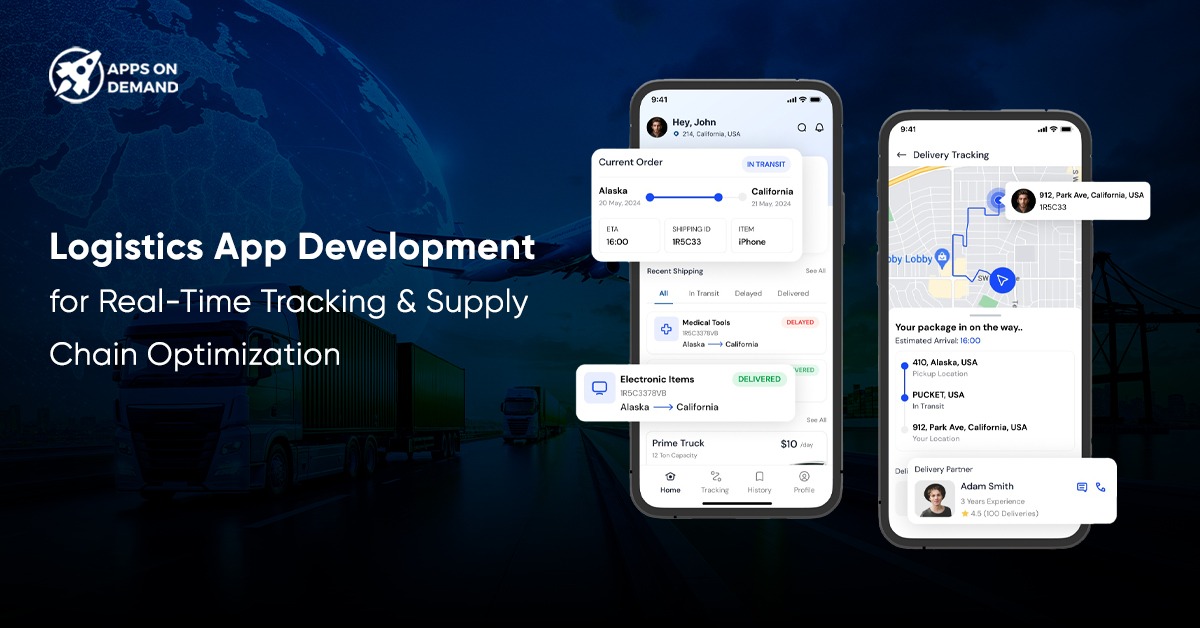
In today’s fast-paced business landscape, logistics app development is becoming essential for companies seeking to enhance their supply chain operations. Whether you’re a startup or a large enterprise, a logistics app empowers your business to streamline fleet management, track shipments in real-time, and improve inventory control. With the increasing need for real-time data, route optimization, and customer satisfaction, investing in logistics mobile app development is a powerful way to drive operational efficiency, reduce costs, and stay competitive in the market.
Beyond operational visibility, modern logistics apps enable data-driven decision-making by centralizing supply chain insights in one platform. Businesses gain better control over deliveries, inventory movement, and workforce productivity, allowing them to respond faster to disruptions and scale operations with confidence.
Why Logistics App Development is Crucial for Supply Chain Efficiency?
In the face of growing consumer demands and a constantly evolving global supply chain, businesses must adapt by adopting more agile and efficient solutions. The digital logistics market is rapidly expanding and is projected to grow from $37.6 B in 2025 to over $120 B by 2032 at a CAGR of 18.1%, reflecting strong demand for technology-driven logistics tools including real-time tracking and optimization. A well-designed supply chain management app helps optimize key operations by offering businesses a real-time view of their fleet, inventory, and shipments.
Key benefits of logistics app development include:
- Real-Time Tracking: Keep tabs on shipments, vehicles, and inventory, offering visibility at every stage of the supply chain and minimizing delays.
- Cost Efficiency: Logistics apps use AI-based algorithms to suggest the most cost-effective routes, reducing fuel consumption and overall transportation costs.
- Customer Satisfaction: Customers appreciate accurate delivery windows and seamless tracking capabilities, resulting in improved customer retention and loyalty.
- Scalability: As your business grows, logistics apps scale with it. A well-developed app can handle increased traffic and complexities without compromising performance.
With logistics apps, businesses can benefit from real-time tracking, route optimization, cost efficiency, and better customer service, all of which ultimately lead to smoother operations and improved customer satisfaction. These apps integrate multiple aspects of logistics, ensuring your supply chain is more adaptable to changes in demand, delivery requirements, and operational challenges.
The Key Features of a Logistics App
To create a logistics app that effectively supports your business goals, it’s vital to include certain must-have features that enhance user experience and operational efficiency. The right mix of features can significantly improve your supply chain performance.
Key features that should be included in a logistics app:
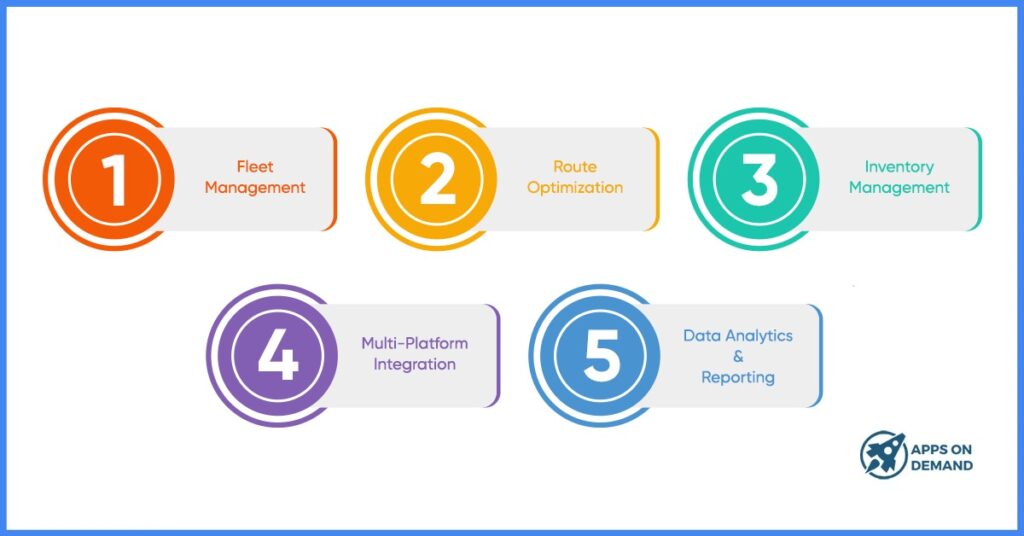
1. Fleet Management
A logistics app should provide real-time tracking and monitoring of vehicles. Features such as maintenance scheduling, fuel consumption tracking, and route optimization enhance the performance and reliability of the fleet.
2. Route Optimization
GPS-based AI-powered route optimization app reduces fuel consumption, enhances delivery times, and minimizes operational costs. This feature ensures timely deliveries, even with fluctuating traffic conditions.
3. Inventory Management
Logistics apps can automate stock management and inventory tracking, ensuring that businesses avoid stockouts or overstocking. Real-time updates allow for seamless management of goods across multiple locations.
4. Multi-Platform Integration
A successful logistics app integrates with existing Enterprise Resource Planning (ERP) systems and other business tools to maintain smooth communication and data flow throughout the supply chain.
5. Data Analytics & Reporting
Analytics features offer predictive insights, helping businesses forecast demand, optimize routes, and reduce inefficiencies. By leveraging big data analytics, organizations can proactively address potential issues.
These logistic app development features ensure seamless operations, making the logistics process faster, more cost-effective, and reliable, helping businesses stay ahead of competitors.
Logistics App Development Process: From Concept to Launch
The custom logistics app development process involves several critical stages, each requiring careful attention to detail and expertise. These stages, from conceptualization to deployment, lay the foundation for a successful app that meets business needs and enhances operational efficiency.
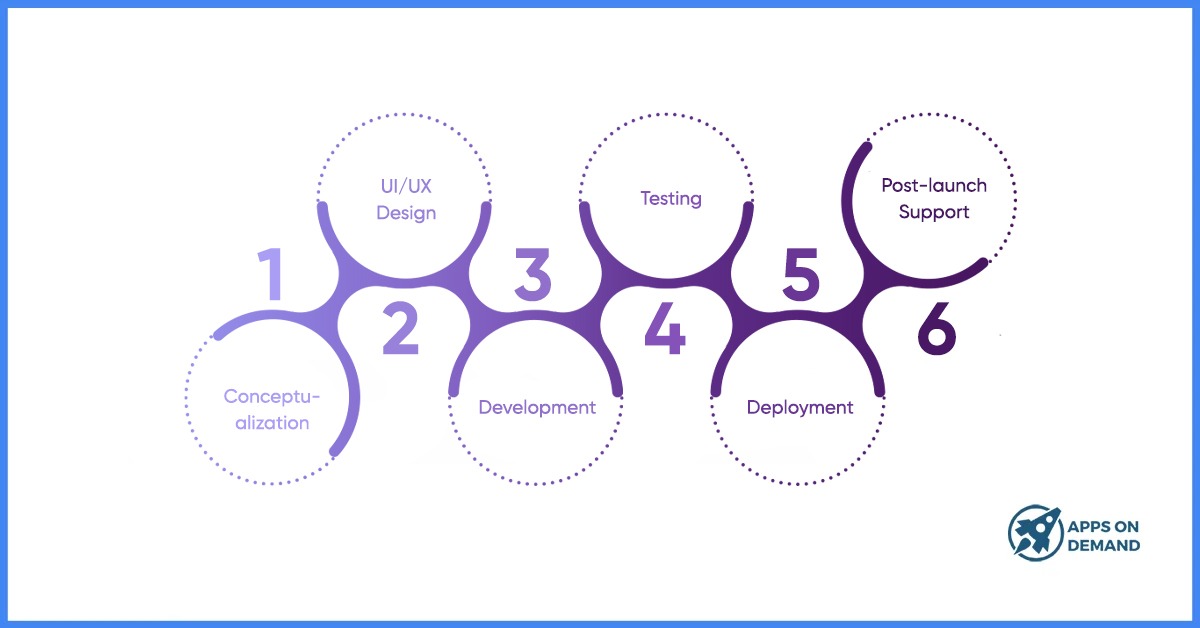
Here’s an overview of the development process:
1. Conceptualization
In the initial phase, define the app’s purpose, target audience, and key functionalities. Understand the supply chain pain points that the app aims to address and define the app’s business value.
2. UI/UX Design
Prioritize intuitive user interface (UI) and user experience (UX) design to ensure the app is easy to navigate. User-friendly interfaces ensure that even employees with minimal technical experience can use the app with ease.
3. Development
The choice of technology stack is crucial for building a scalable logistics app. A backend built on technologies like Node.js, Python, and AWS supports real-time data processing and guarantees the scalability needed for business growth.
4. Testing
Conduct rigorous testing to ensure that the app is free from bugs, performs optimally under high traffic, and complies with relevant industry standards (e.g., data protection, logistics regulations).
5. Deployment
Launch the app across iOS and Android platforms, ensuring the app is compatible with various devices used by customers, drivers, and employees.
6. Post-launch Support
Continuous app monitoring and post-launch updates ensure that the app remains effective as new challenges arise, helping businesses continuously improve and adapt their logistics processes.
Also read this guide on Logistic Software Development for detailed information.
Logistics App Development Cost
Understanding the cost structure of developing a logistics app is critical for businesses looking to invest in this technology. The logistics app development cost varies depending on factors such as the complexity of features, the chosen technology stack, and the platform (iOS, Android, or cross-platform).
Factors that affect the cost of logistics app development:
1. Feature Complexity
A basic logistics app with core features like shipment tracking and order management costs less, while advanced apps with AI-powered route optimization, real-time GPS tracking, analytics dashboards, and third-party integrations require a higher investment.
2. Technology Stack & Infrastructure
The choice of programming languages, frameworks, and cloud infrastructure (AWS, Azure, Google Cloud) impacts development and maintenance costs. Apps requiring real-time data processing, scalability, and high availability typically demand more robust and costlier tech stacks.
3. Platform Selection
Building native apps for both iOS and Android involves separate development efforts, increasing costs. Cross-platform frameworks like React Native or Flutter can reduce development time and budget while maintaining performance.
4. UI/UX Design Complexity
Custom UI/UX designs tailored for drivers, admins, and customers add to development costs but improve usability and adoption. Apps with multiple user roles, dashboards, and workflows require additional design and testing effort.
5. Third-Party Integrations & APIs
Integrations with ERP systems, payment gateways, maps, IoT devices, or telematics solutions increase complexity and cost but are often essential for enterprise-grade logistics apps.
Estimated costs:
- Basic App: $10,000 – $20,000
- Advanced Enterprise App: $50,000 – $150,000
Investing in a high-quality logistics app may require significant upfront costs, but the return on investment (ROI) through operational savings and efficiency improvements will pay off in the long run.
How Global Logistics Leaders Optimize Supply Chains to Drive Performance
The world’s most successful logistics companies like DHL, UPS, FedEx, and Maersk, didn’t dominate by chance. They follow data-backed frameworks that continuously improve operational efficiency, delivery speed, and customer experience.
Here are the proven strategies industry leaders rely on to take their supply chain performance to the next level:
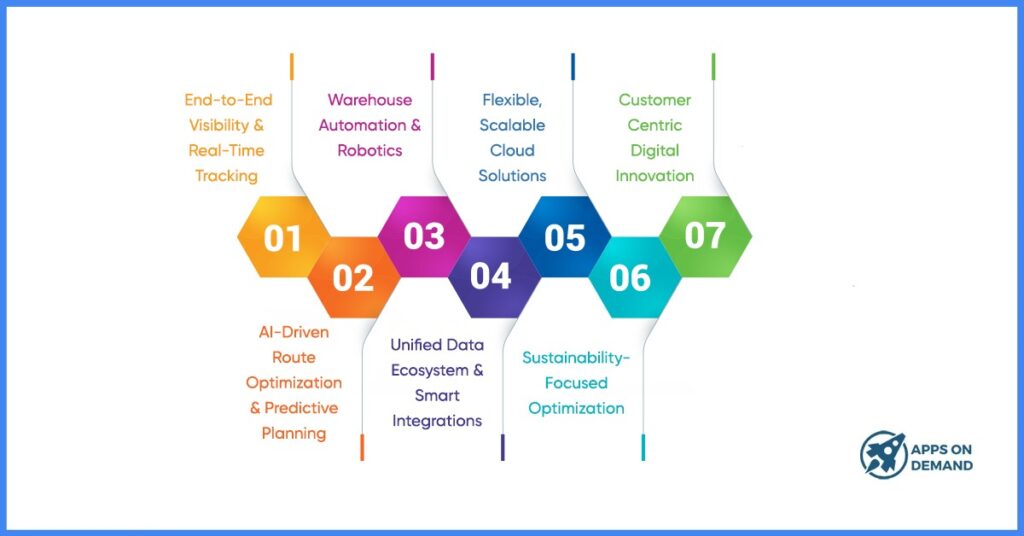
1. End-to-End Visibility & Real-Time Tracking
Market leaders use IoT sensors, advanced routing software, and digital twin simulations to monitor shipments, warehouses, and fleet assets in real time—reducing delays and improving response times.
2. AI-Driven Route Optimization & Predictive Planning
Companies like UPS and FedEx leverage machine learning to forecast delays, weather impact, and seasonal surges—optimizing routes, ETA accuracy, and fuel consumption automatically.
3. Warehouse Automation & Robotics
DHL and Amazon rely heavily on robotics for picking, packing, and inventory movement, leading to higher accuracy, lower labor costs, and faster order fulfillment.
4. Unified Data Ecosystem & Smart Integrations
Industry leaders centralize data from fleet systems, ERP, WMS, GPS, and customer portals allowing faster decision-making and aligning suppliers, drivers, and customers in real time.
5. Flexible, Scalable Cloud Solutions
Global carriers adopt cloud platforms to expand operations across regions without heavy infrastructure costs, while maintaining security, compliance, and performance.
6. Sustainability-Focused Optimization
Companies like Maersk invest in EV fleets, fuel-efficient routing, and carbon tracking to reduce emissions while improving operational efficiency and brand credibility.
7. Customer-Centric Digital Innovation
Leaders are shifting from traditional logistics to customer-first experiences—providing live shipment tracking, proactive notifications, 24/7 self-service portals, and transparent pricing.
By following these proven strategies, logistics leaders have transformed their supply chains from cost centers into competitive business engines, setting benchmarks for speed, accuracy, visibility, and customer delight.
How to Choose the Right Development Partner?
Choosing the right development partner is a critical decision that directly impacts the performance, scalability, and long-term success of your logistics app. The ideal partner goes beyond writing code as they understand logistics workflows, operational bottlenecks, and long-term growth objectives. A truly capable team works as an extension of your business, aligning technology decisions with real-world supply chain needs.
- Proven experience in logistics, supply chain, or fleet management app development
- Strong expertise in scalable architecture, cloud infrastructure, and system integrations
- Hands-on capability with AI, GPS tracking, real-time analytics, and automation
- Ability to design secure, high-performance applications built for future growth
- Transparent development processes with clear timelines and consistent communication
- A strong portfolio showcasing real-world logistics use cases and measurable results
- Positive client feedback highlighting reliability, quality delivery, and post-launch support
Partnering with a team that offers logistics app development services with proven industry experience ensures your solution is scalable, secure, and future-ready, while aligning technology decisions with real-world supply chain workflows, performance goals, and long-term business growth.
Future of Logistics Apps: Industry Trends
The logistics industry is evolving rapidly with new technological advancements, and logistics apps must evolve with it. Emerging trends, such as AI-powered predictive analytics, IoT for real-time tracking, and the integration of blockchain for enhanced security and transparency, will shape the future of logistics.
Key trends to watch out for:
- AI & Machine Learning: Predictive analytics is helping logistics companies plan better and optimize resources.
- Blockchain: Enhancing security and transparency in the supply chain.
- IoT (Internet of Things): Real-time tracking of assets, vehicles, and shipments, improving operational efficiency.
These technologies not only improve operational efficiency but also provide valuable insights, enabling businesses to predict demand, optimize routes, and enhance supply chain management. Keeping an eye on these trends and integrating them into your logistics app can give your business a competitive edge.
Conclusion
Logistics app development is an investment that can transform the way your business manages its supply chain operations. By integrating key features like real-time tracking, route optimization, and data analytics, businesses can improve operational efficiency, reduce costs, and provide better service to their customers.
Selecting the right development partner and understanding the cost structure ensures a smooth and successful development journey, ultimately leading to a logistics app that supports long-term growth and competitive advantage in the industry.