

Quick Summary :
- Mobile app development trends like AI, automation, 5G, and cloud computing are transforming on-demand apps by improving speed, personalization, scalability, and real-time service delivery.
- Features such as voice commands, AR, hyperlocal services, and subscription models enable seamless interactions, faster fulfillment, and higher customer engagement across on-demand platforms.
- Adopting trends like blockchain security and sustainable app development helps businesses build trusted, scalable, and eco-friendly on-demand apps that meet evolving consumer expectations in 2026 and beyond.
In today’s fast‑paced digital world, on‑demand apps are transforming industries by offering instant access to services and products, from ride‑hailing and food delivery to home services and healthcare. The significance of mobile app development trends is underscored by the rapid expansion of the overall mobile app market, which is projected to grow to an estimated USD 377.99 billion in 2026 and continue expanding strongly in the years ahead.
With billions of smartphone users globally and consumer expectations for convenience rising each year, understanding the latest on‑demand app development trends is essential for businesses that want to thrive. In this blog, we’ll explore the top 10 trends that are shaping the future of on‑demand mobile apps in 2026 and how these trends will impact app development for on‑demand services such as booking, delivery, and real‑time service platforms.
How AI is Empowering On-Demand Apps
Artificial Intelligence (AI) is playing a crucial role in reshaping the way on-demand apps function. By harnessing the power of AI, on-demand services can provide personalized experiences, enhance user engagement, and optimize operational efficiency. AI helps businesses meet customer demands by predicting user preferences, automating tasks, and improving decision-making processes.
- AI-driven personalization allows businesses to offer tailored recommendations, targeted offers, and individualized experiences for users.
- By analyzing user data, AI can suggest services based on past behavior, enhancing customer satisfaction and loyalty.
- AI enables predictive analytics by analyzing past user data to forecast future behavior, improving service delivery in areas like ride-hailing, food delivery, and more.
10 Mobile App Development Trends
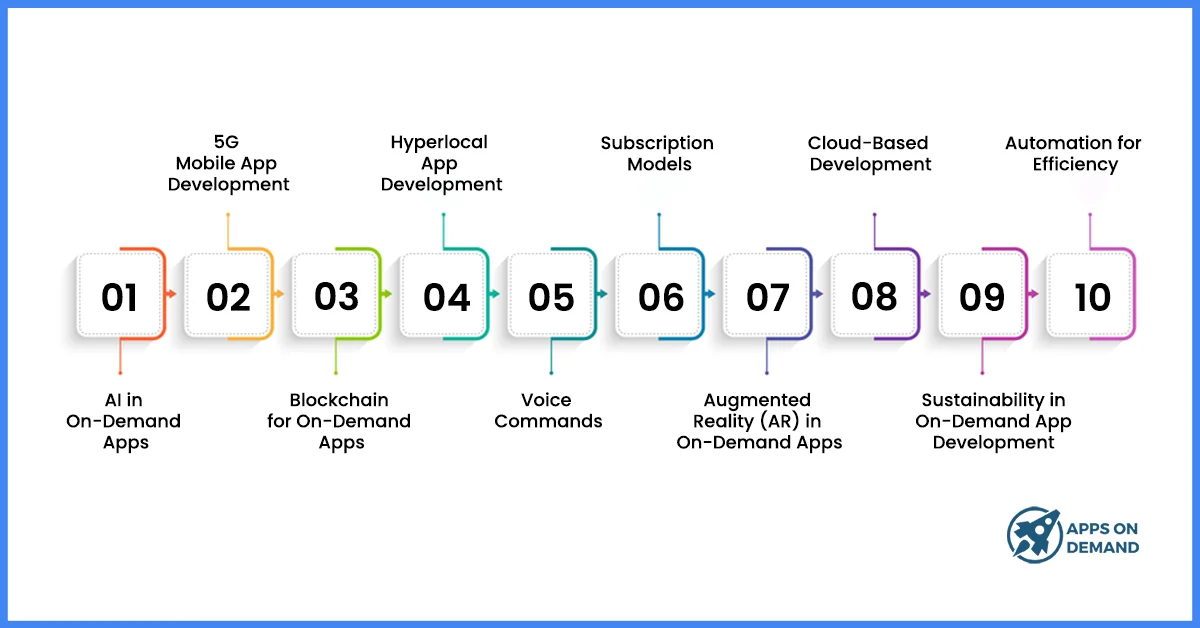
The mobile app development trends for 2026 are reshaping the on-demand app landscape. These trends are driven by technological advancements, evolving user expectations, and the increasing need for businesses to adapt quickly to stay competitive. Below, we explore the top 10 trends that are having the most significant impact on on-demand apps in 2026.
1. AI in On-Demand Apps
AI is revolutionizing how on-demand apps operate, allowing for smarter, more personalized services. AI’s ability to predict user needs and automate processes is enabling on-demand services to enhance user experiences, optimize efficiency, and reduce operational costs.
- Personalized Recommendations: AI uses data to offer tailored suggestions based on past behavior.
- Automation: AI-driven chatbots and customer service automation improve efficiency and reduce costs.
- Predictive Analytics: AI anticipates user behavior, allowing businesses to offer timely services.
2. 5G Mobile App Development
The arrival of 5G technology promises to significantly enhance on-demand apps by improving speed, connectivity, and real-time app performance. With 5G, on-demand services will offer faster response times, smoother interactions, and better overall service quality.
- Faster Response Times: Instantaneous communication between users and service providers.
- Improved Connectivity: Reliable connections, even in crowded areas or remote locations.
- Real-Time Data: Allows for better navigation and tracking, especially in services like ride-hailing or food delivery.
3. Blockchain for On-Demand Apps
Security and transparency are critical for on-demand apps, especially in industries handling sensitive data or financial transactions. Blockchain technology enables secure, decentralized transactions and data protection, increasing trust and security in on-demand services.
- Secure Transactions: Blockchain ensures that payments and transactions are protected from fraud.
- Data Privacy: Protects users’ personal information with encrypted transactions.
- Transparency: Users can verify transactions and service charges, such as ride fares or delivery fees.
4. Hyperlocal App Development
The shift toward hyperlocal services allows on-demand apps to serve communities more effectively by delivering products and services in real time. This approach improves delivery speed, increases customer satisfaction, and helps businesses target specific regions with precision, especially when combined with localized B2B outreach strategies such as a targeted CEO Email List to connect directly with decision-makers and accelerate regional growth.
- Faster Service Delivery: Localized services can be delivered in real-time, improving customer satisfaction.
- Targeted Services: Businesses can cater to the specific needs of local communities.
- Lower Operational Costs: By focusing on smaller areas, businesses can optimize logistics and reduce costs.
5. Voice Commands
Voice command integration is transforming the way users interact with on-demand apps. In 2026, more apps will feature voice-controlled functionalities, allowing users to interact with services in a hands-free, seamless manner.
- Hands-Free Interaction: Users can place orders, book services, or hail rides without touching their device.
- Increased Accessibility: Makes apps easier to use, especially for people with disabilities.
- Efficiency: Streamlines app interactions and saves users time by enabling quick voice commands.
6. Subscription Models
With the rise of consumer expectations, subscription-based models are becoming a key feature in on-demand apps. Subscriptions provide convenience, predictability, and additional value, benefiting both users and businesses by ensuring steady revenue streams and loyal customers.
- Predictable Revenue: Subscription models create consistent income for businesses.
- Customer Loyalty: Subscriptions encourage long-term customer relationships and repeat business.
- Exclusive Perks: Offers additional value through discounts, priority access, or special services for subscribers.
Also, read our blog on Comprehensive Guide to On-Demand App Development
7. Augmented Reality (AR) in On-Demand Apps
AR technology enhances user experiences by allowing customers to visualize products or services in a virtual environment before making decisions. In 2026, more on-demand apps will incorporate AR to make the service experience more interactive and immersive.
- Virtual Try-Ons: Allows users to try products like clothes or furniture virtually before purchasing.
- Enhanced Engagement: Improves user interaction and helps businesses stand out.
- Better Decision-Making: Helps users make more informed choices by visualizing how a product fits in their space or with their needs.
8. Cloud-Based Development
Cloud-based development is essential for scaling on-demand apps efficiently. By leveraging the cloud, businesses can reduce infrastructure costs, improve uptime, and manage data storage and processing more effectively, allowing them to adapt quickly to user demands.
- Scalability: The cloud allows apps to grow and handle increasing demand without infrastructure limitations.
- Cost Efficiency: Cloud services often provide pay-as-you-go pricing, reducing unnecessary expenses.
- Accessibility: Data can be accessed and updated in real-time, ensuring businesses can provide consistent service.
9. Sustainability in On-Demand App Development
Sustainability is becoming a core focus in on-demand services, especially with growing environmental awareness. Apps that prioritize eco-friendly options, such as using electric vehicles or reducing packaging waste, are increasingly appealing to today’s environmentally-conscious consumers.
- Eco-Friendly Practices: Implementing sustainable practices like electric vehicles for ride-hailing or green packaging for deliveries.
- Brand Loyalty: Consumers are more likely to support businesses that align with their environmental values.
- Cost Savings: Sustainability can also reduce costs by improving energy efficiency or reducing waste.
10. Automation for Efficiency
Automation is streamlining processes across various on-demand industries. From automated dispatch systems to AI-powered customer service, automation helps businesses improve service delivery, cut operational costs, and handle large volumes of requests more effectively.
- Faster Response: Automation reduces manual intervention, speeding up processes like dispatching or order fulfillment.
- Cost Reduction: Businesses can reduce labor costs by automating routine tasks.
- Improved Accuracy: Automation reduces human errors, ensuring smoother operations.
How Mobile App Development Trends Impact On-Demand Apps
The 2026 mobile app development trends are set to significantly shape the future of on-demand apps by improving performance, security, scalability, and personalization. These advancements equip businesses with smarter tools to enhance service delivery, streamline operations, and meet rising customer expectations. Below is how these trends directly impact app development for on-demand services:
1. AI and Automation
AI-driven automation enables on-demand apps to deliver faster services, predictive support, and more personalized customer experiences. From intelligent recommendations to automated customer interactions, AI helps businesses reduce manual effort while improving service accuracy and response times.
2. Hyperlocal Services
The shift toward hyperlocal services allows on-demand apps to serve communities more effectively by delivering products and services in real time. This approach improves delivery speed, increases customer satisfaction, and helps businesses target specific regions with precision especially valuable when combined with localized outreach strategies such as a Canada Business Email List for regional growth.
3. 5G and Cloud Technologies
With 5G mobile app development and cloud-based infrastructure, on-demand apps can offer faster performance, minimal downtime, and seamless scalability. These technologies ensure reliable app experiences even during peak usage, boosting user engagement and trust.
As businesses continue to adapt to these trends, they will be better equipped to meet the growing demands of modern consumers, leading to increased customer loyalty, operational efficiency, and long-term market competitiveness.
Conclusion
The future of on-demand apps in 2026 is exciting, with mobile app development trends transforming the way businesses deliver services. From AI-powered personalization to 5G-enabled performance, these innovations promise to enhance user experiences and improve operational efficiency. As businesses look to the future, staying on top of these trends is essential to remaining competitive in the ever-evolving on-demand app market.
To ensure success, businesses looking to build or enhance their on-demand apps should partner with experts who specialize in on-demand app development and bespoke mobile app development. This ensures that their app is not only future-proof but also tailored to their unique business needs. Embrace these trends today to stay ahead of the curve and offer unparalleled experiences to your users.